1When should kids start flossing?
Cavities often start between back teeth where brushes cannot reach. Dental associations advise cleaning between a child's teeth once they touch — commonly in the primary molars around ages 2–6.
2Choosing the best floss for kids
| Feature | Why it matters |
|---|---|
| Rounded, edge-free head | Protects gums and cheeks |
| Small head | Fits small mouths and back teeth |
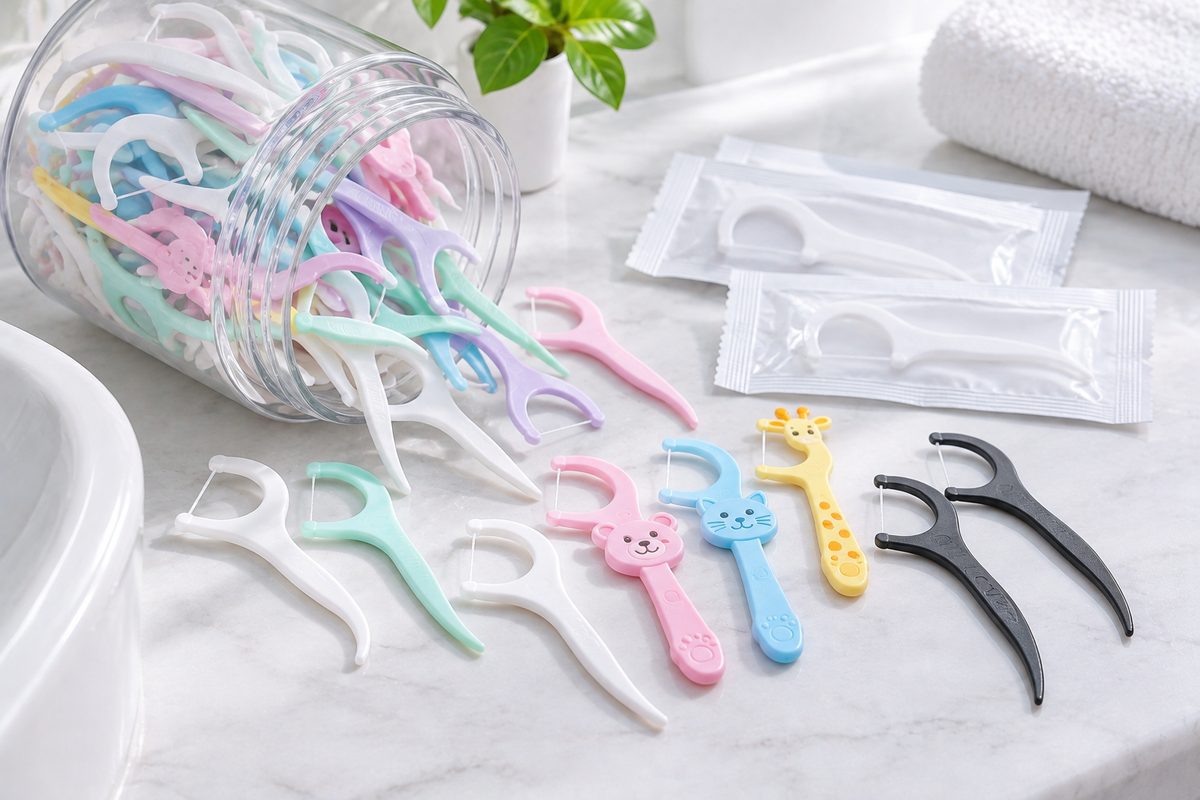
| Short handle / cartoon shape | Easy grip, fun to use |
| Waxed, smooth floss | Glides without snapping onto gums |
| Mild fruit or no flavour | Avoids strong mint children dislike |
| Individually wrapped or bucket | Hygiene and school/travel use |
Kangde Med's children's floss stick series uses a rounded head without edges and a slender cartoon-style handle designed for young children.
3How to floss a child's teeth
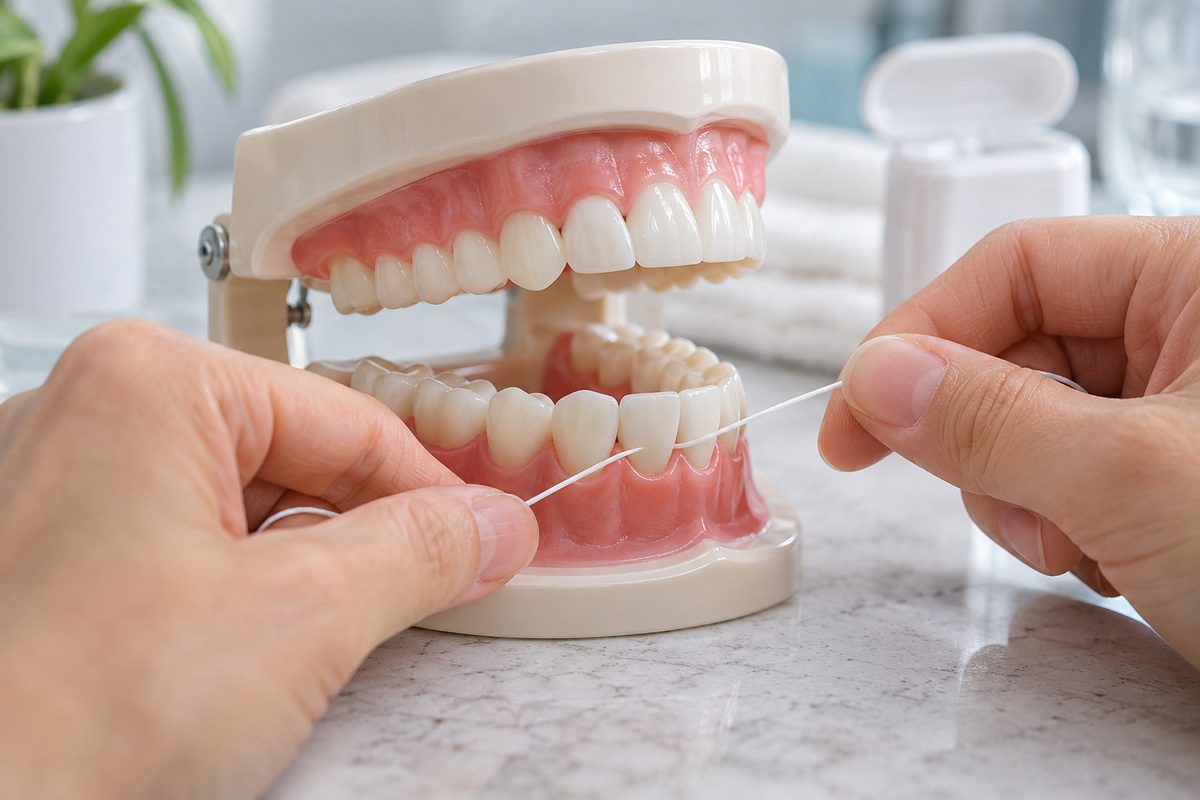
- Sit the child on your lap or stand behind them with good light.
- Gently slide the floss between two teeth.
- Curve around each tooth and move up and down.
- Keep it short and positive — praise helps.
4Kids' tongue scrapers
A small, soft plastic tongue cleaner can help older children with a coated tongue or bad breath. Use light pressure once a day. See tongue scraper benefits.
5For brands
Kids' oral care lines sell on design and safety: rounded heads, bright handles, mild flavours and colourful packaging. Ask about custom handle shapes and colours in our floss picks private-label guide.
6Frequently asked questions
At what age should a child start flossing?
When two teeth touch each other — for most children between 2 and 6 years old.
Are floss picks safe for toddlers?
Floss picks designed for children, with small rounded heads, are safe when used by a parent with gentle pressure.
When can kids floss on their own?
Usually around 8–10 years old, once they can tie shoelaces or write neatly. Supervise until technique is good.