1What is blister packaging?
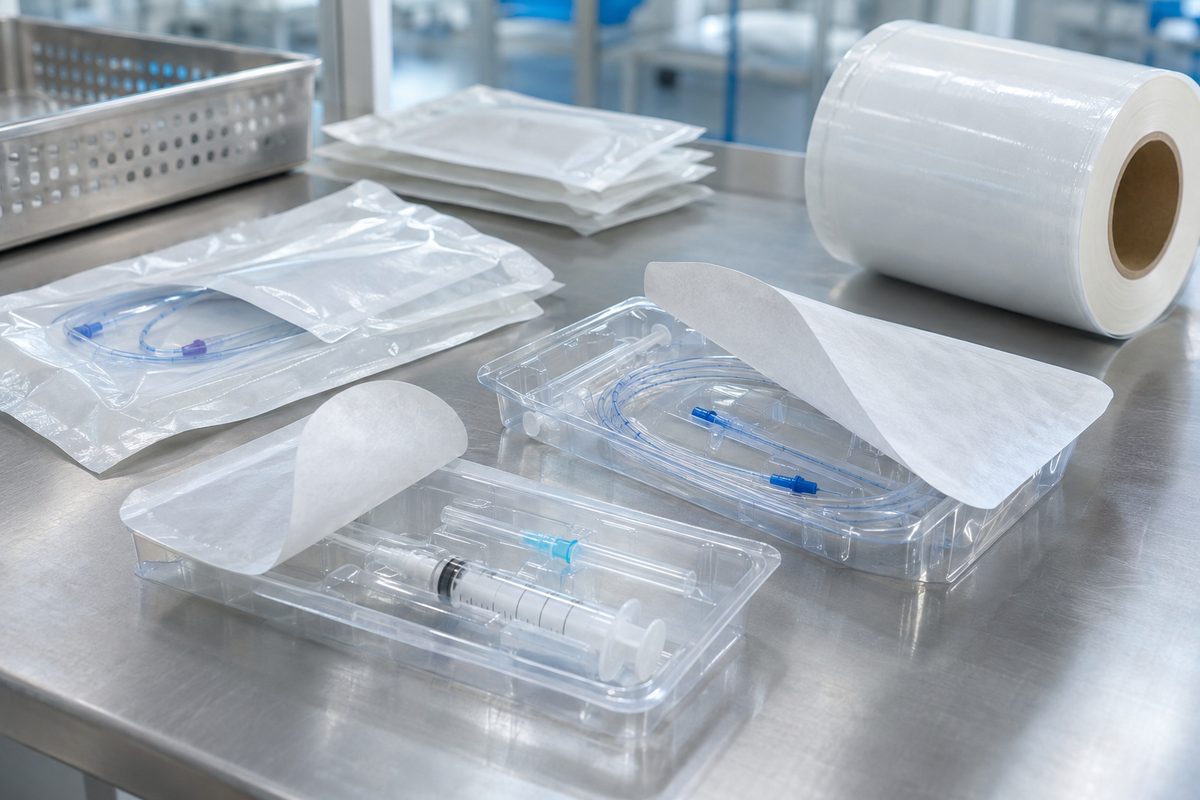
A blister is a cavity formed in plastic film by heat and vacuum or pressure. In pharmaceuticals, blisters hold tablets under foil; in medical devices, blisters and trays hold syringes, catheters, needles, implants and kits under a peelable lid.
2Materials
| Component | Common materials | Notes |
|---|---|---|
| Forming web (flexible) | PA/PE, PP/PE, PET/PE | Form-fill-seal disposables |
| Rigid tray | PETG, PP, HIPS, PC | Heavier devices, implants |
| Porous lid | Coated medical paper, Tyvek® | EO, radiation |
| Non-porous lid | PET/PE film, foil | Radiation only |
Kangde Med supplies PP/PE and PA/PE blister films, PET/PE lidding films and coated paper as roll-stock in custom widths.
3Process overview
- Thermoforming — film heated and formed into cavities.
- Loading — device placed manually or robotically.
- Lidding — coated paper or film sealed with heated platens.
- Cutting and inspection — individual units separated, seals inspected.
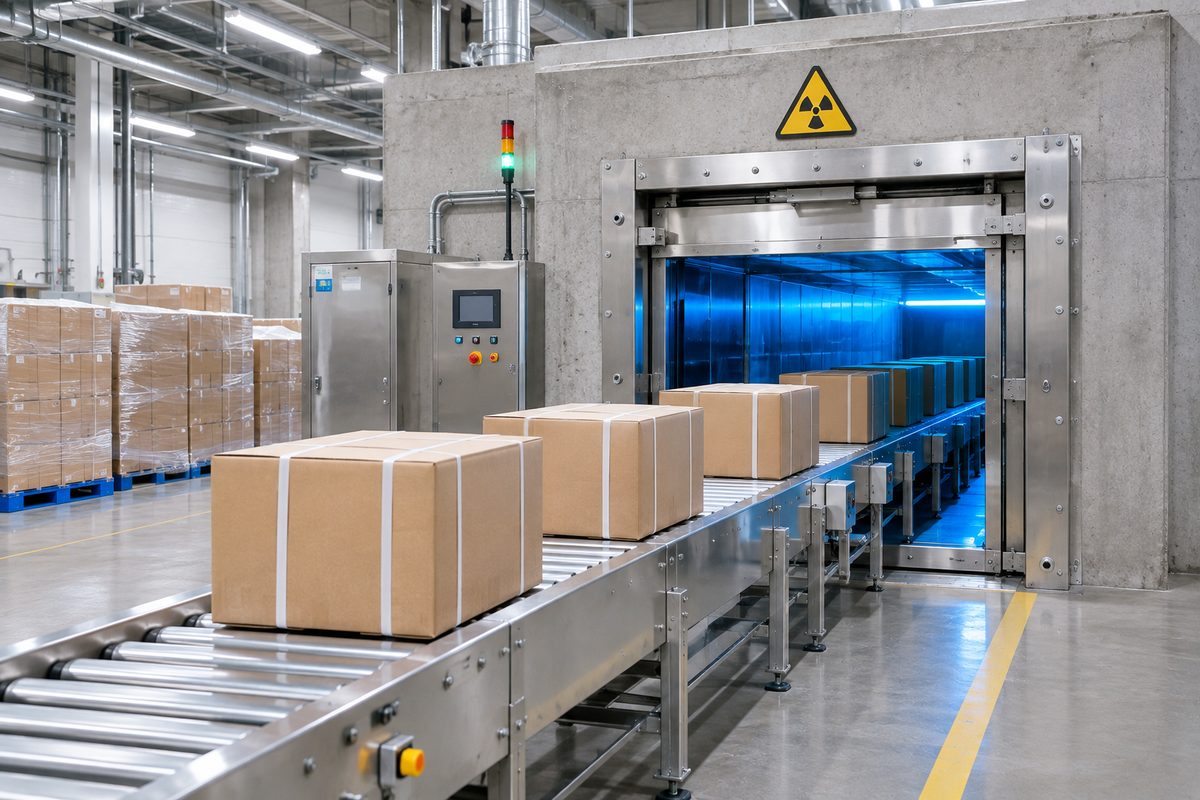
- Sterilization — EO or radiation.
4Design tips
- Keep wall thickness adequate at deep draws — thin corners puncture.
- Design a peel corner or thumb notch for aseptic opening.
- Use heat-seal-coated lids matched to the tray resin.
- Consider double blisters for OR presentation.
5Validation
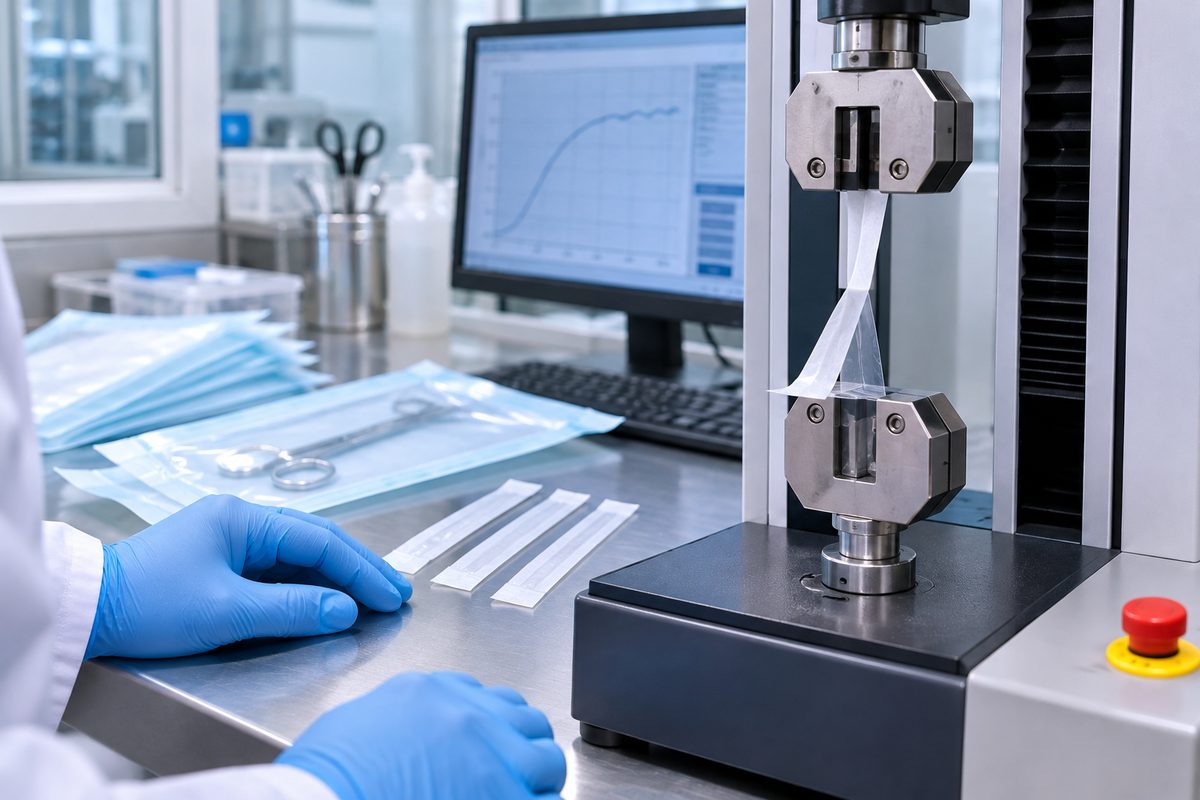
Seal strength (ASTM F88), dye penetration, burst, transport simulation and aging per ISO 11607. See the broader medical device packaging guide.
6Frequently asked questions
What is the difference between a blister and a tray?
A blister is usually formed from flexible film on a form-fill-seal line; a tray is a rigid thermoformed part, often pre-formed and lidded separately.
What lid is used for EO-sterilized blisters?
A porous lid such as heat-seal-coated medical paper or Tyvek®, which lets EO in and out.
Can blister packs be steam sterilized?
Only if the forming and lidding materials are rated for steam temperatures; most device blisters are EO- or radiation-sterilized.