1Types of heat sealers
| Type | How it works | Pros | Cons | Best for |
|---|---|---|---|---|
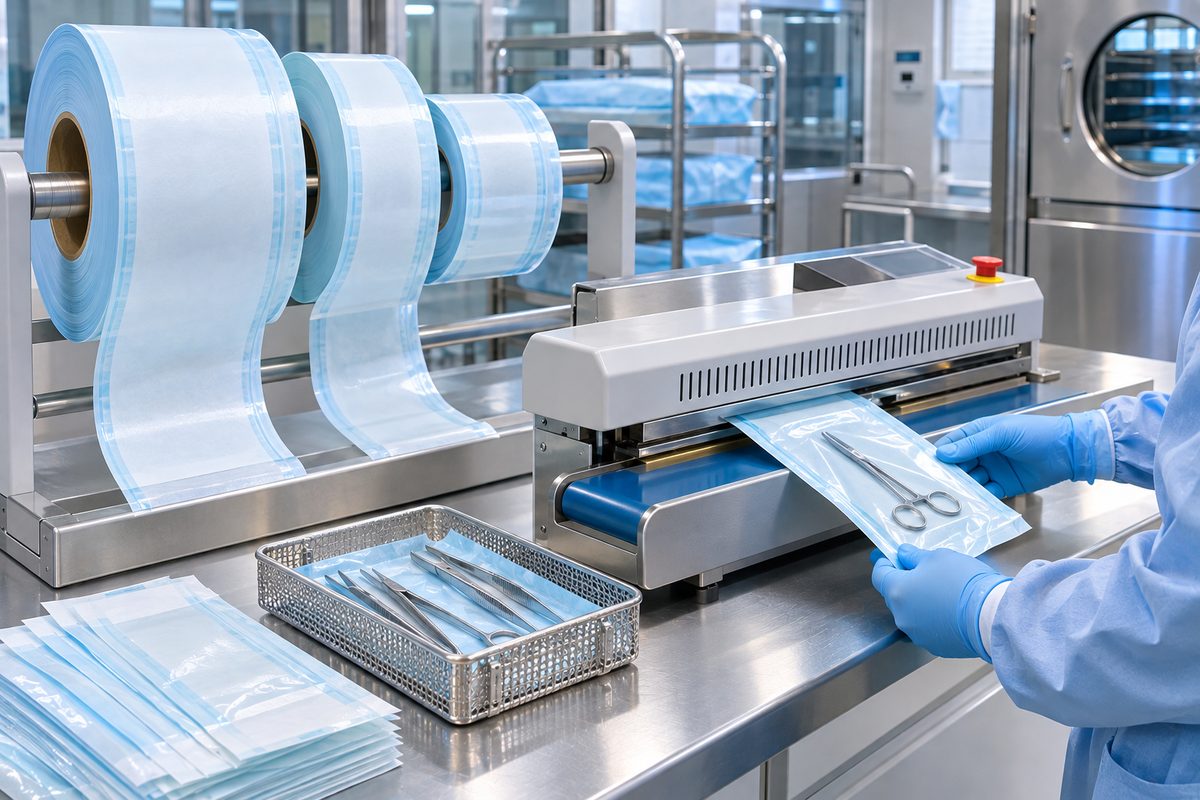
| Continuous rotary/band sealer | Pouch passes between heated belts and pressure rollers | Fast, consistent, parameter monitoring and printing | Higher cost | Hospitals, CSSDs, device makers |
| Impulse sealer | Heating wire pulses during each seal | Low cost, cool when idle | Narrow seal, operator-dependent | Small clinics |
| Constant-heat jaw sealer | Heated jaws held at temperature | Wide seal, robust | Can overheat thin films | Labs, some industrial uses |
| Hand-held heat sealer | Portable heated jaw | Flexible | Hard to validate | Field and repair use |
| Vertical band sealer | Band sealer orientated vertically | Good for bags with powders/liquids | Not typical in CSSD | Industrial packaging |
2Critical sealing parameters
- Temperature — usually 170–200 °C for medical paper/PET-CPP film; follow the pouch manufacturer's range.
- Pressure — even contact across the seal width.
- Dwell time or speed — longer at lower temperature, shorter at higher.
A seal that is too cold peels apart or channels; a seal that is too hot becomes brittle, tears fibres on opening or burns through film.
3Validation and routine checks
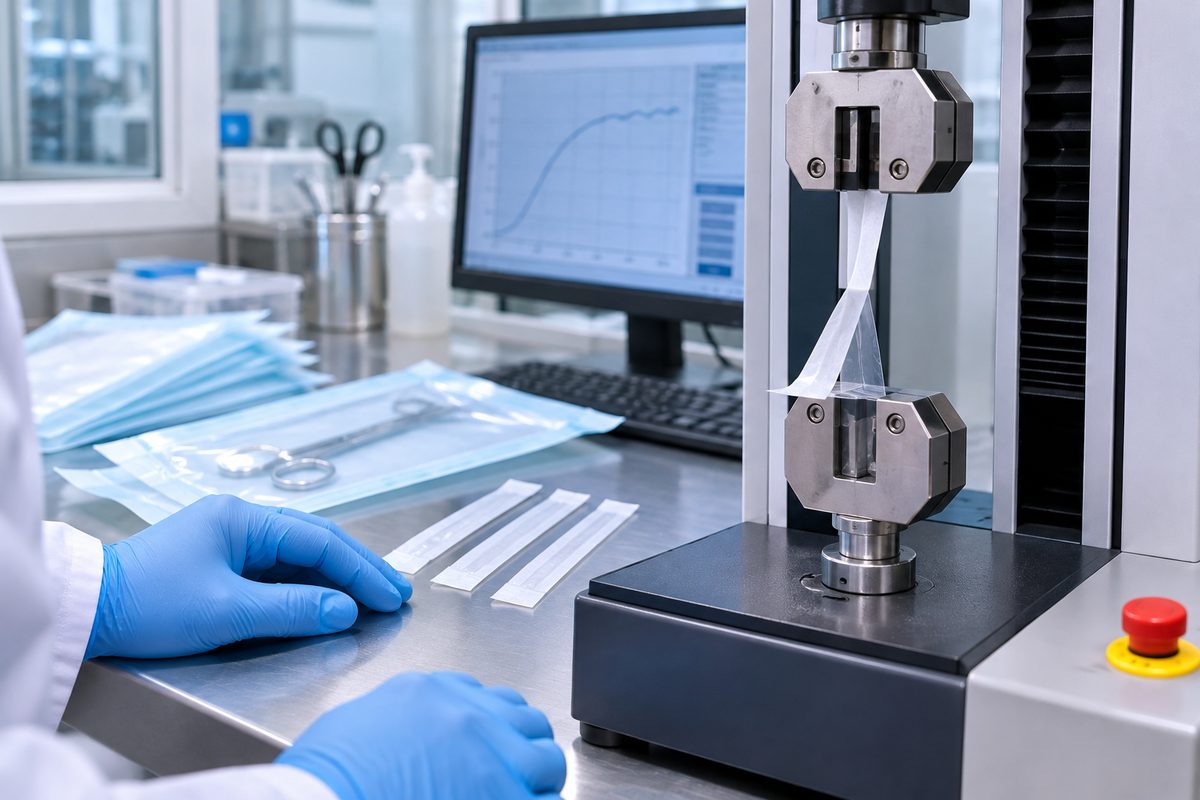
ISO 11607-2 requires installation, operational and performance qualification of sealing processes. In practice: 1. Define the operating window with seal-strength tests (ASTM F88) at low, nominal and high settings. 2. Lock settings and train operators. 3. Run a seal-check (ink test or seal-check strip) at the start of each day and after changes. 4. Record temperature, operator and date — modern sealers print or log this automatically.
4Choosing a sealer for your volume
| Daily volume | Suggested sealer |
|---|---|
| < 50 pouches | Impulse sealer or self-seal pouches |
| 50–500 | Compact rotary sealer |
| > 500 | Validatable rotary sealer with printing and data export |
5Consumables
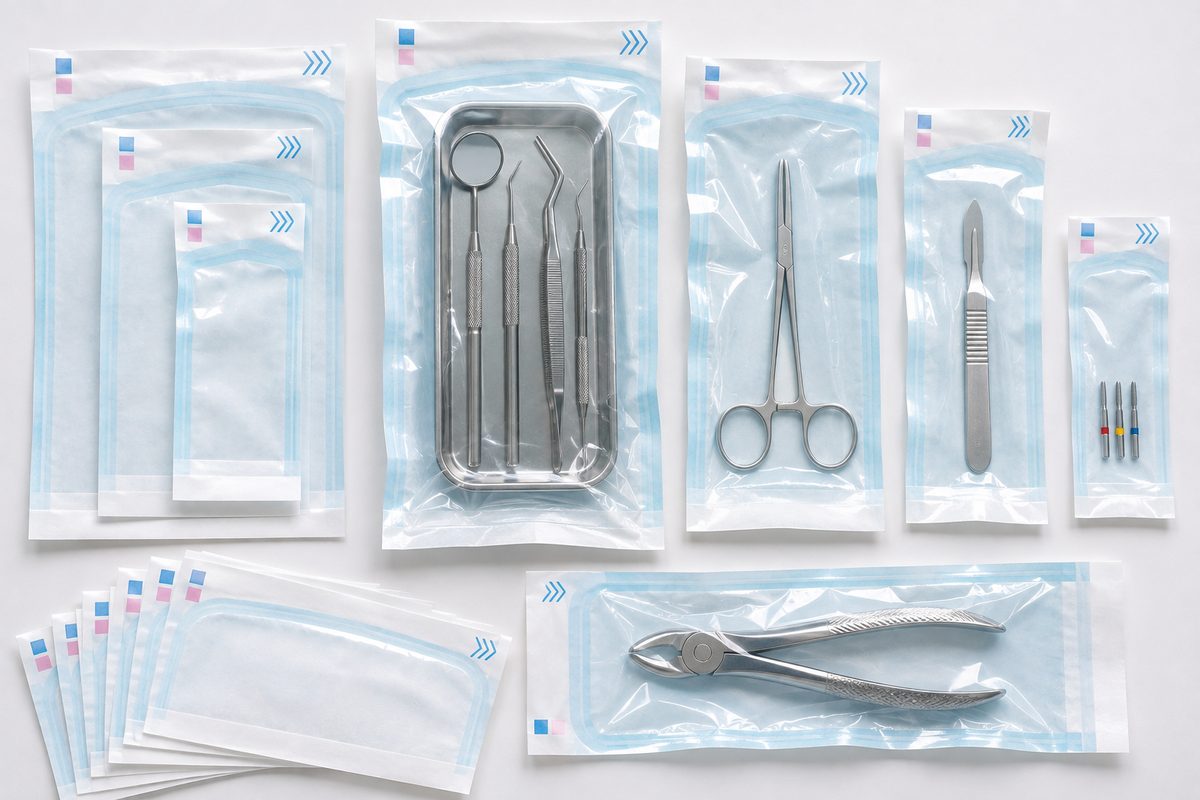
Use reels and heat-seal pouches whose seal range matches your sealer. Kangde Med flat reels, gusseted reels and heat-seal pouches are compatible with standard rotary sealers; ask us for the recommended sealing window.
6Frequently asked questions
What temperature should a medical heat sealer be set to?
Typically between about 170 and 200 °C for paper/PET-CPP pouches and reels, but always use the range recommended by the pouch manufacturer and validated for your sealer.
Do heat sealers need validation?
Yes. ISO 11607-2 requires the sealing process to be validated and routinely monitored, including daily seal checks.
Can I use a food vacuum sealer for sterilization pouches?
No. Food sealers are not designed or validated for medical paper/film and do not control or record sealing parameters.