1Comparison
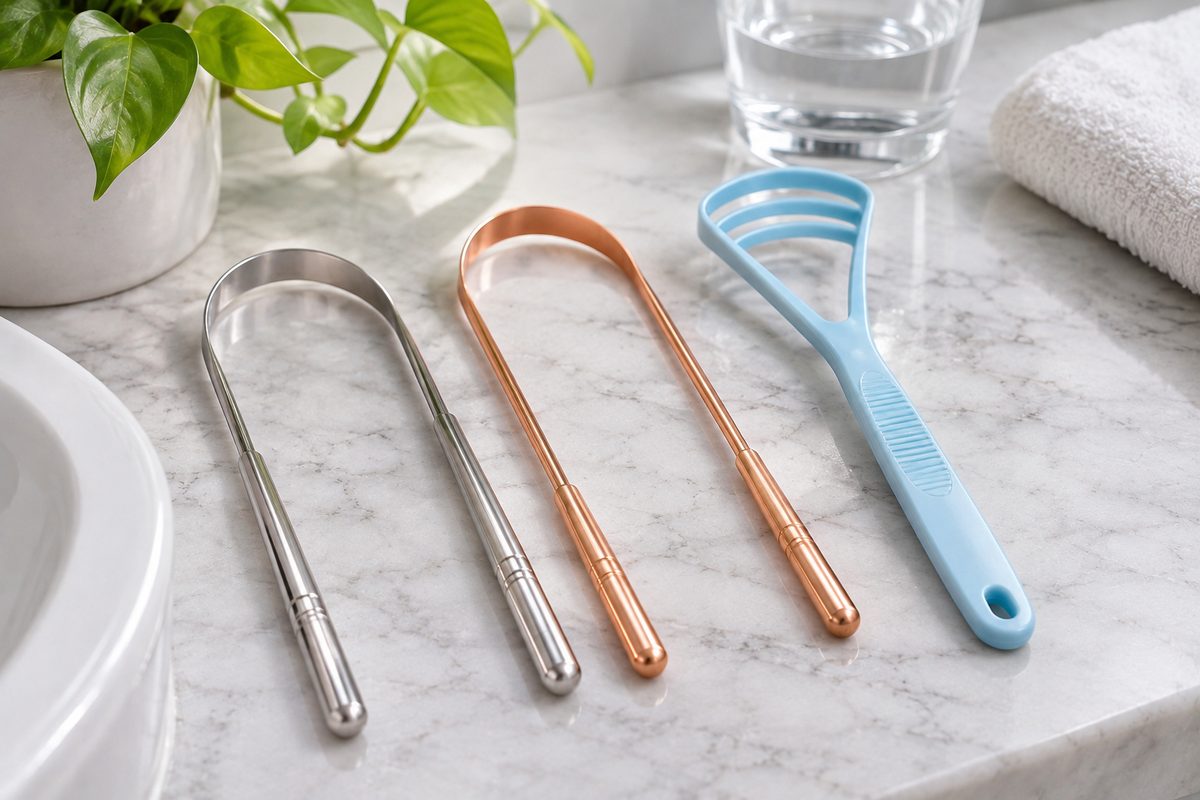
| Stainless steel | Copper | Plastic | |
|---|---|---|---|
| Durability | Very high | High | Moderate |
| Hygiene/cleaning | Boilable, dishwasher-safe | Wash; polish tarnish | Wash; replace regularly |
| Antimicrobial surface | No | Yes (copper ions) | No |
| Comfort | Firm | Firm | Softer, flexible |
| Price | Medium | Higher | Low |
| Best for | Daily long-term use | Ayurvedic/natural markets | Kids, travel, hotels, trial |
2What makes a good tongue scraper?
- Smooth, rounded scraping edge — no burrs.
- Comfortable width to cover the tongue.
- Secure grip or handles.
- Easy to clean.
3How to clean a tongue scraper
Rinse after each use, wash with soap and water daily, and dry. Stainless steel can be boiled or put in the dishwasher; copper can be cleaned with lemon and salt to remove tarnish; plastic should be replaced every 2–3 months or when worn.
4Where to buy tongue scrapers
Pharmacies, supermarkets and online for consumers; dental supply distributors for clinics. For bulk or private label, buy from a manufacturer: Kangde Med produces tongue scrapers in several handle designs with custom colours, individual blister or bulk packing and brand printing.
5Related
Tongue scraper benefits and how to use one · How to clean your tongue.
6Frequently asked questions
Is copper or stainless steel better for tongue scraping?
Both work well. Stainless steel is easier to keep clean and does not tarnish; copper has antimicrobial surface properties but needs polishing.
Are plastic tongue scrapers effective?
Yes. They remove coating effectively but wear faster and should be replaced every few months.
How do I clean a metal tongue scraper?
Rinse after use, wash with soap and water, and occasionally boil stainless steel or polish copper.