1Comparison
| Sterilization wrap | Pouches & reels | Rigid containers | |
|---|---|---|---|
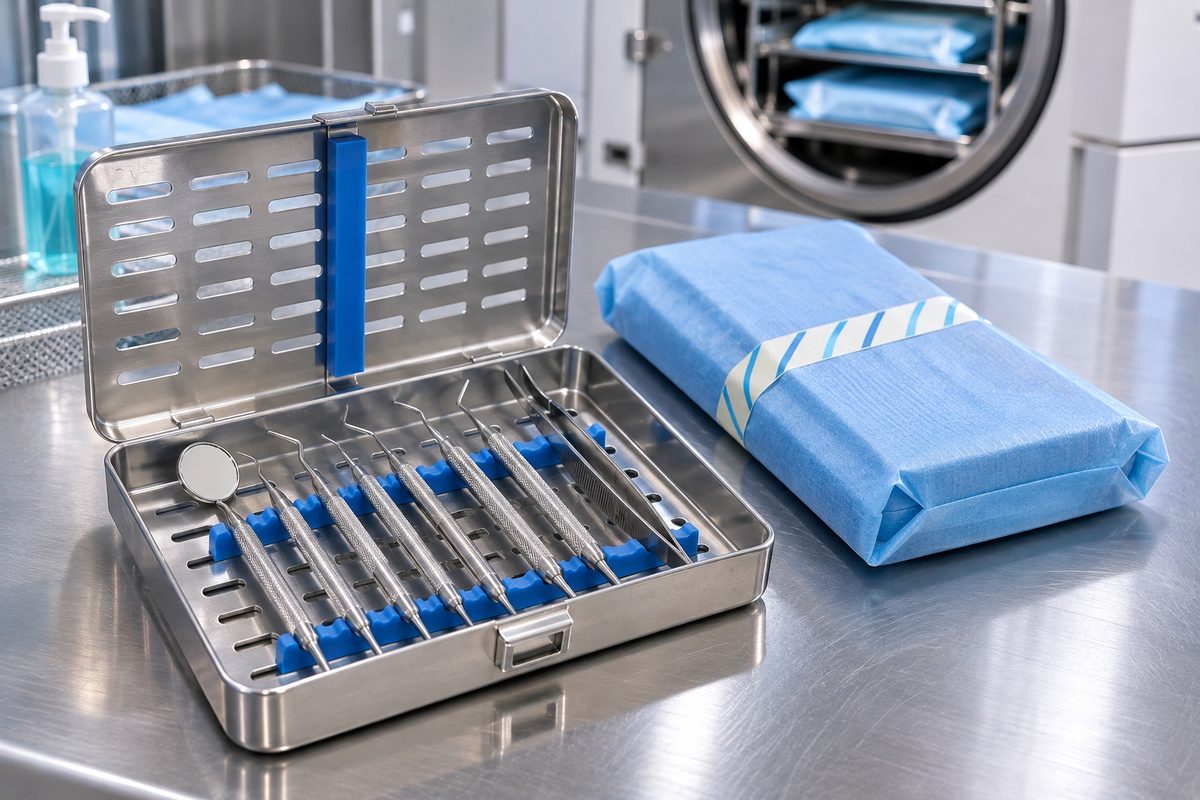
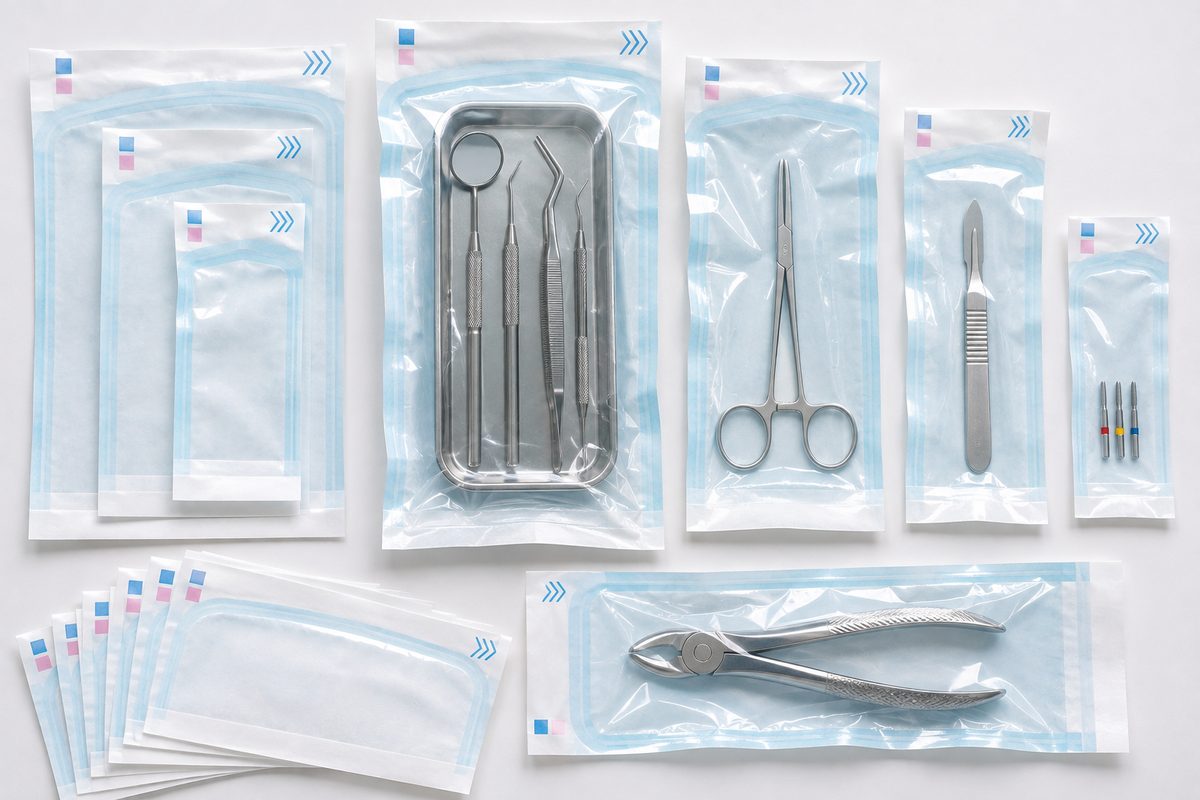
| Materials | SMS polypropylene, crepe paper | Medical paper + film | Aluminium/stainless/polymer with filters |
| Visibility | None | Contents visible | None (some windows) |
| Reusable | No | No | Yes |
| Tear risk | Moderate | Low | Very low |
| Weight limit | Up to ~11 kg per tray (AAMI) | Light items | Heavy sets |
| Closure & indicator | Indicator tape | Printed indicators | Lock + tag indicators |
| Cost per cycle | Low–medium | Low | Low after purchase |
2When to use each
- Wrap — standard and large instrument trays, linen packs; double-wrap (sequential or simultaneous).
- Pouches/reels — single instruments, small sets, items needing visibility; see the pouch buyer guide.
- Rigid containers — orthopaedic and heavy surgical sets used daily.
3Wrapping techniques
Envelope (diagonal) fold for square trays, square (parcel) fold for rectangular items. Wrap snugly but not tightly, avoid tenting, and close with steam indicator tape. Place a Class 5 integrating indicator in the geometric centre of the tray.
4Hidden costs to compare
Wrap: purchase and disposal volume, tear-related reprocessing. Containers: purchase, filters, gaskets, washing, repairs and validation. Pouches: sizes stocked, sealer if heat-seal.
For full consumable programmes, see our sterilization barrier system range.
5Frequently asked questions
Is sterilization wrap better than pouches?
Neither is universally better. Wrap suits large trays; pouches suit single instruments and small sets where seeing the contents helps.
Do rigid sterilization containers need indicators?
Yes. Use an external indicator (often on the lock or tag) and an internal chemical indicator in every container.
Why double-wrap sterilization packs?
Double wrapping adds a second barrier and makes aseptic opening easier; it is standard practice for many tray sets.