1Common causes
| Cause | What to do |
|---|---|
| Gingivitis (plaque inflammation) | Floss daily, brush twice, professional cleaning |
| New flossing routine | Continue gently; bleeding fades |
| Aggressive technique | Slide, don't snap; C-shape |
| Hard toothbrush | Switch to soft bristles |
| Floss too thick for the gap | Use thinner waxed or PTFE floss |
| Hormonal changes, pregnancy | Extra care; tell your dentist |
| Medications (blood thinners) | Inform your dentist |
| Periodontitis, other conditions | Professional diagnosis |
2How to stop gums from bleeding when flossing
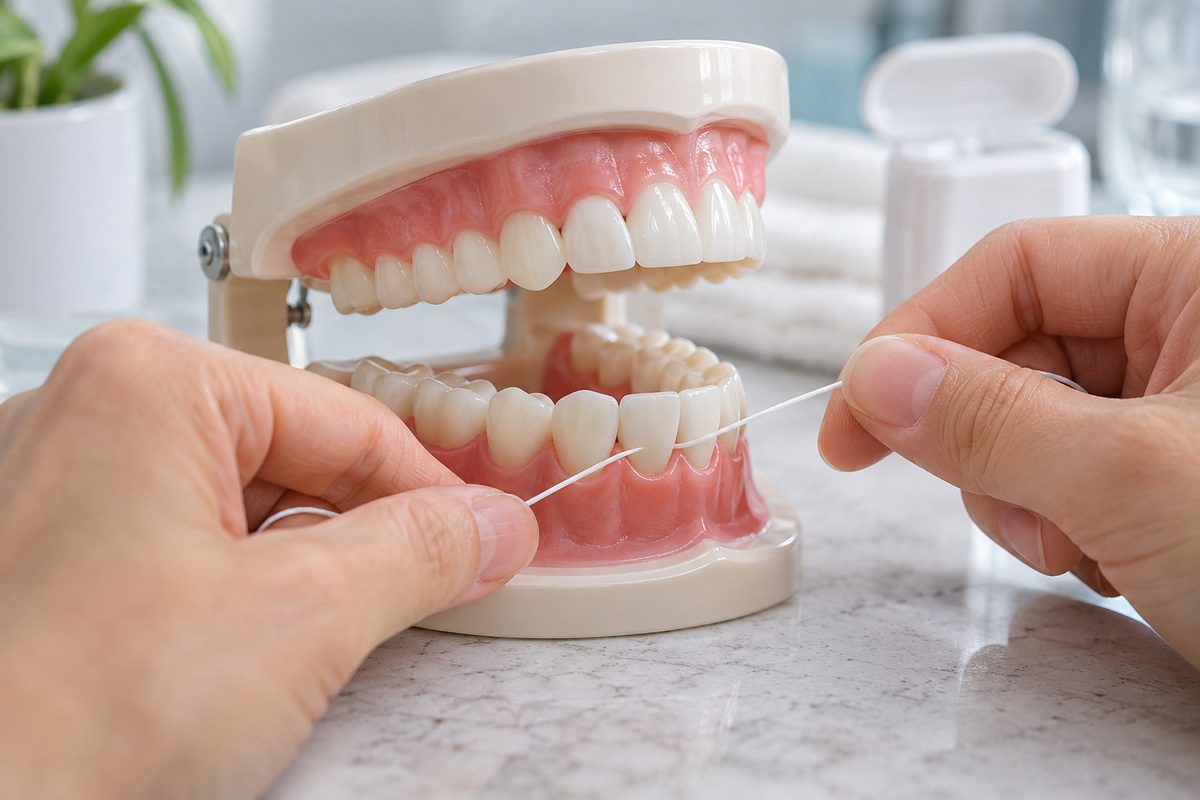
- Floss gently every day with the C-shape technique.
- Choose a floss that fits — waxed or tape for sensitive gums (types of floss).
- Brush twice daily with a soft brush and fluoride toothpaste.
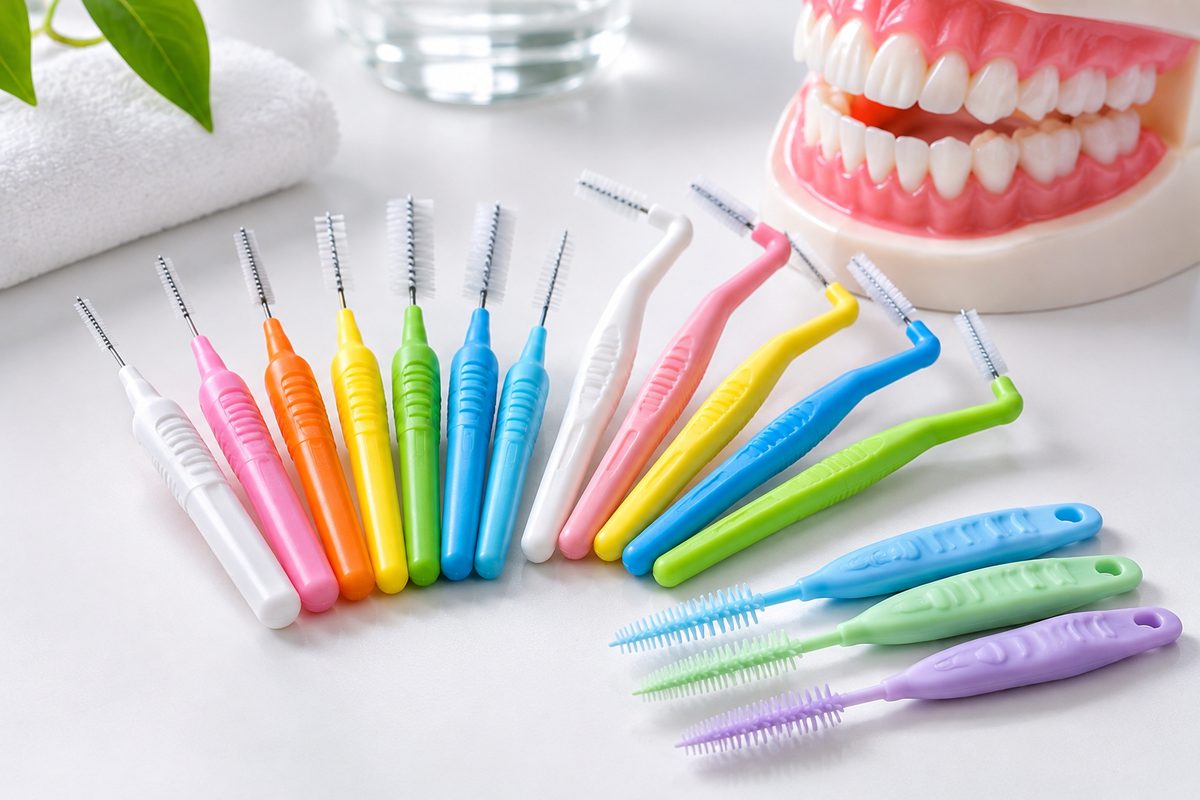
- Consider interdental brushes where gaps allow.
- Book a professional cleaning to remove tartar.
3Why do gums bleed after not flossing for a while?
Plaque builds up and inflames the gum; when floss reaches the inflamed tissue it bleeds. Regular flossing removes the plaque and the bleeding settles.
4When to see a dentist
Bleeding beyond two weeks of good care, spontaneous bleeding, swelling or pus, persistent bad breath, gum recession or loose teeth.
5Tips for healthy gums
Daily interdental cleaning, twice-daily brushing, no smoking, balanced diet and regular dental check-ups.
6Frequently asked questions
Should I keep flossing if my gums bleed?
Usually yes — gently. Bleeding from gingivitis typically decreases within one to two weeks of daily flossing. See a dentist if it does not.
Why does only one spot bleed when I floss?
Plaque or tartar may be concentrated there, or a filling edge, food impaction or local gum problem may be present. If it persists, have it checked.
How long does gum bleeding from flossing last?
Typically one to two weeks of consistent, gentle flossing.