1Types of interdental brushes
| Type | Features | Best for |
|---|---|---|
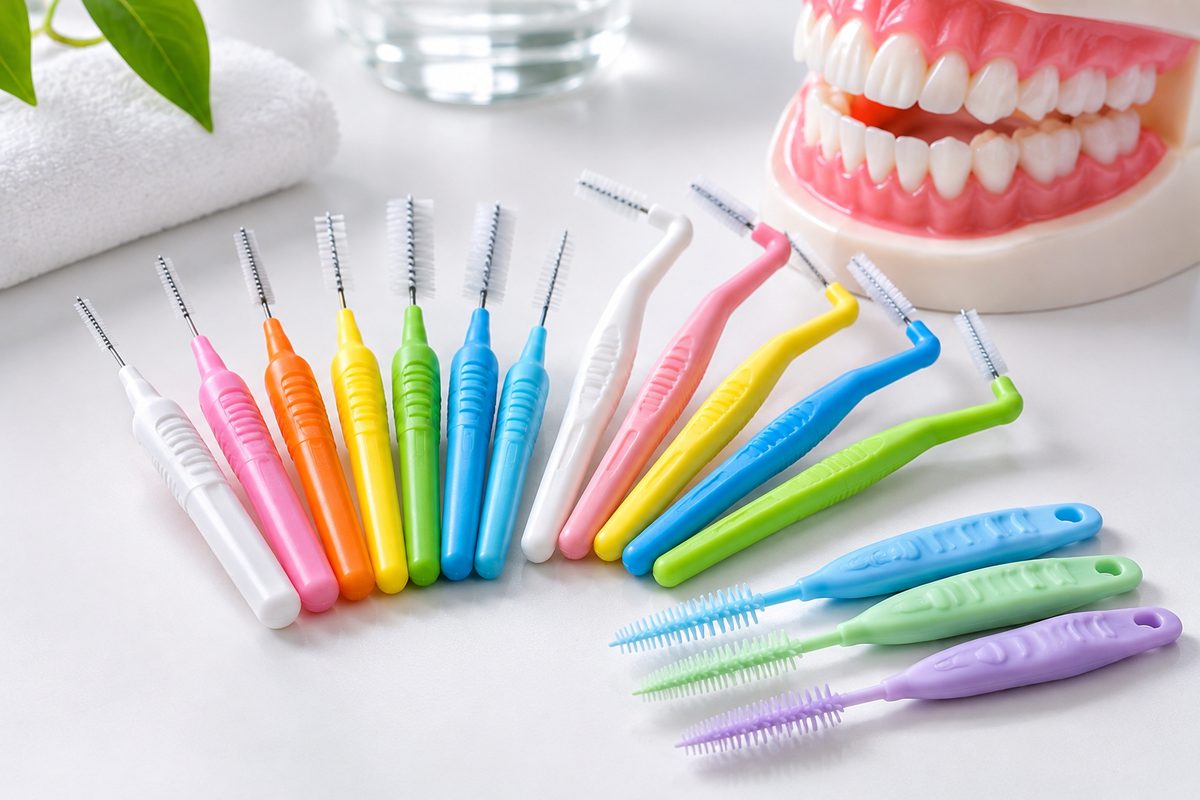
| I-shaped (straight) | Standard wire brush, cap doubles as handle | Front and premolar gaps |
| L-shaped (angled) | Angled head for back teeth | Molars |
| Silicone / rubber | Wire-free, soft rubber bristles | Sensitive gums, travel, beginners |
| Toothpick brush / dual-use | Pick on one end, brush on the other | On-the-go cleaning |
| Long-handle | Better reach | Limited dexterity |
2Interdental brush sizes
Brands use colour codes, but the reliable measure is the passage hole diameter (PHD), the smallest hole the brush can pass through (ISO 16409). Typical ranges run from ~0.6 mm (very tight) to 1.5 mm+ (wide gaps, implants). Most people need two or three sizes for different areas — ask your hygienist to size you.
3How to use an interdental brush
- Choose the correct size for the gap.
- Insert gently at the gumline at a slight angle, following the gap.
- Move in and out 2–3 times — no twisting.
- Rinse and repeat for the next gap.
- Rinse and air-dry the brush; replace after about a week or when bristles splay.
4Interdental brushes for braces, implants and gum pockets
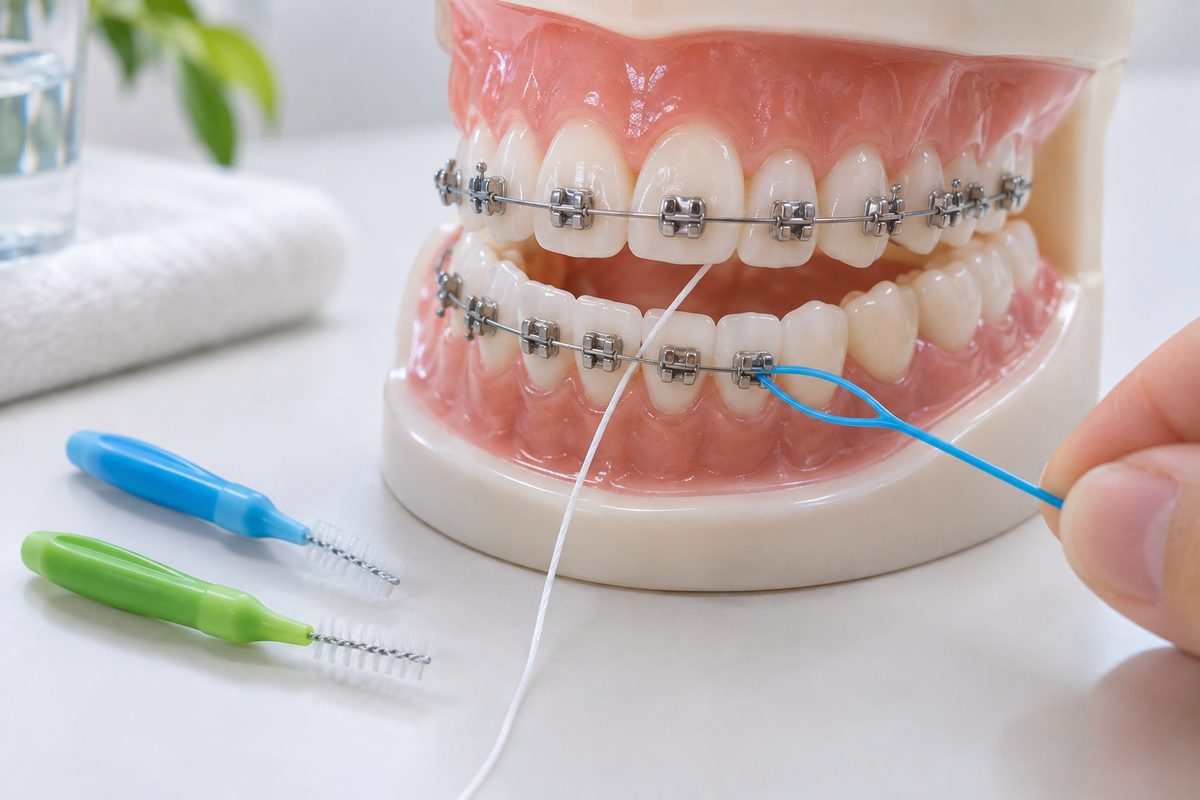
Small brushes clean around brackets and under wires (flossing with braces); larger ones clean under implant bridges and open embrasures after gum recession. Gum-pocket brushes with tapered heads are used on dental advice.
5Interdental brushes vs floss
In open spaces brushes typically remove more plaque and are easier to use; in very tight contacts floss is still needed. See interdental brush vs floss.
6Sourcing interdental brushes
Kangde Med produces I-shaped brushes from 0.7 mm, L-shaped brushes, silicone brushes and dual-use toothpick brushes with custom wire size, handle colour, packaging and brand printing — ideal for dental clinics, orthodontic practices and private-label brands.
7Frequently asked questions
What size interdental brush should I use?
The largest size that slides into the gap without force. Most people need two or three sizes; a hygienist can measure you.
Are interdental brushes better than floss?
In open spaces they usually clean better and are easier to use; in tight contacts floss may still be needed.
How often should I replace an interdental brush?
When the bristles splay or the wire bends — often after about a week of daily use.
Can interdental brushes damage gums?
Not if correctly sized and used gently. Forcing a brush that is too large can cause soreness.