1How does ultrasonic cleaning work?
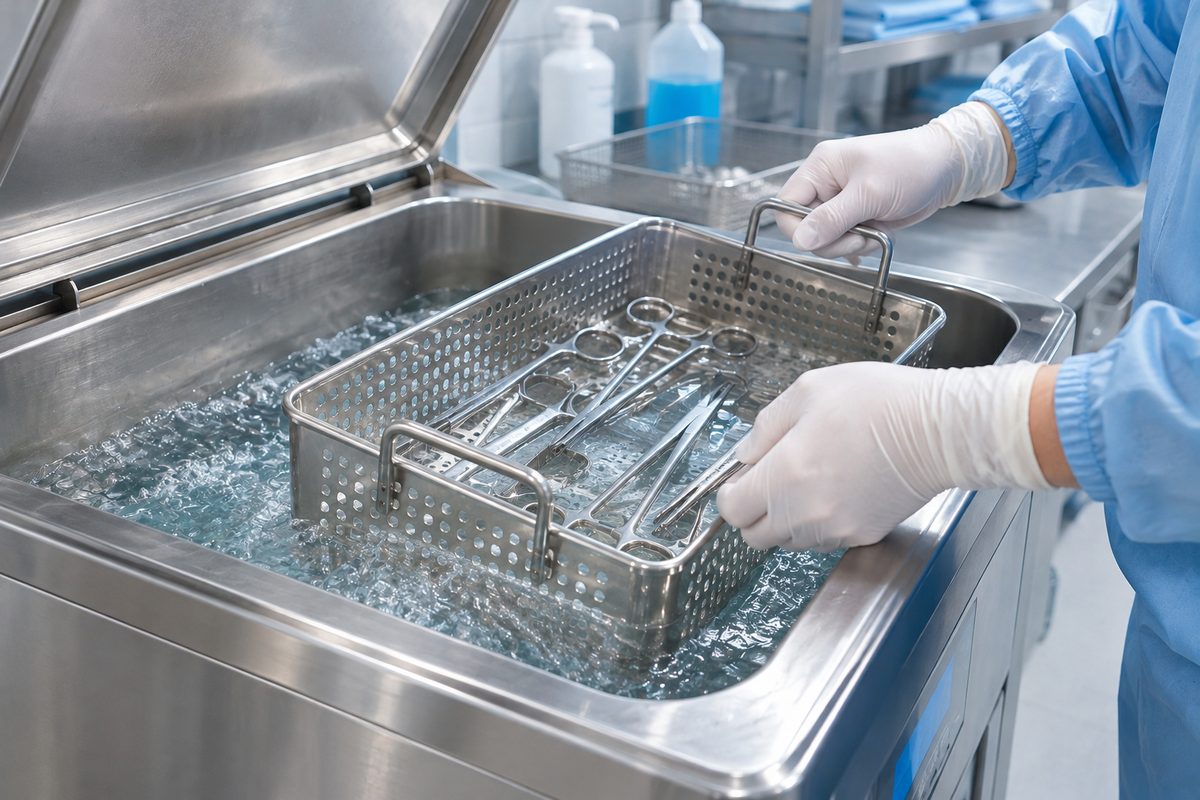
A transducer under the tank converts electrical energy into high-frequency vibration. The sound waves create alternating high- and low-pressure zones; in the low-pressure phase tiny vacuum bubbles form, and in the high-pressure phase they collapse violently. This cavitation scrubs blood, cement and debris out of places brushes cannot reach.
2Ultrasonic cleaner vs washer-disinfector
| Ultrasonic cleaner | Washer-disinfector | |
|---|---|---|
| Action | Cavitation in a detergent bath | Spray-arm washing, rinsing, thermal disinfection (A0 ≥ 600), drying |
| Cycle time | 5–15 min + rinse and dry | 45–75 min complete |
| Documentation | Minimal | Cycle records, ISO 15883 validation |
| Cost | Low | Higher |
| Best for | Small clinics, pre-cleaning of complex items | Busy clinics, hospitals, CSSDs |
3How to use a dental ultrasonic cleaner
- Fill with fresh solution to the fill line; degas for a few minutes.
- Place instruments in a basket or cassette — never directly on the tank floor.
- Open hinged instruments; do not overload.
- Run the cycle per detergent instructions (often 5–10 min).
- Rinse thoroughly, dry and inspect.
- Change the solution at least daily or when visibly soiled.
4Testing performance
Run a foil test (aluminium foil is pitted evenly by working cavitation) or use commercial soil test indicators weekly. Washer-disinfectors should be tested with soil indicators and thermal records per ISO 15883.
5Common mistakes
- Using disinfectant instead of detergent in the bath.
- Cleaning with the lid open (aerosols).
- Putting handpieces or motors in ultrasonic baths (not allowed by most IFUs).
- Packaging instruments while still wet.
6After cleaning: packaging and sterilization
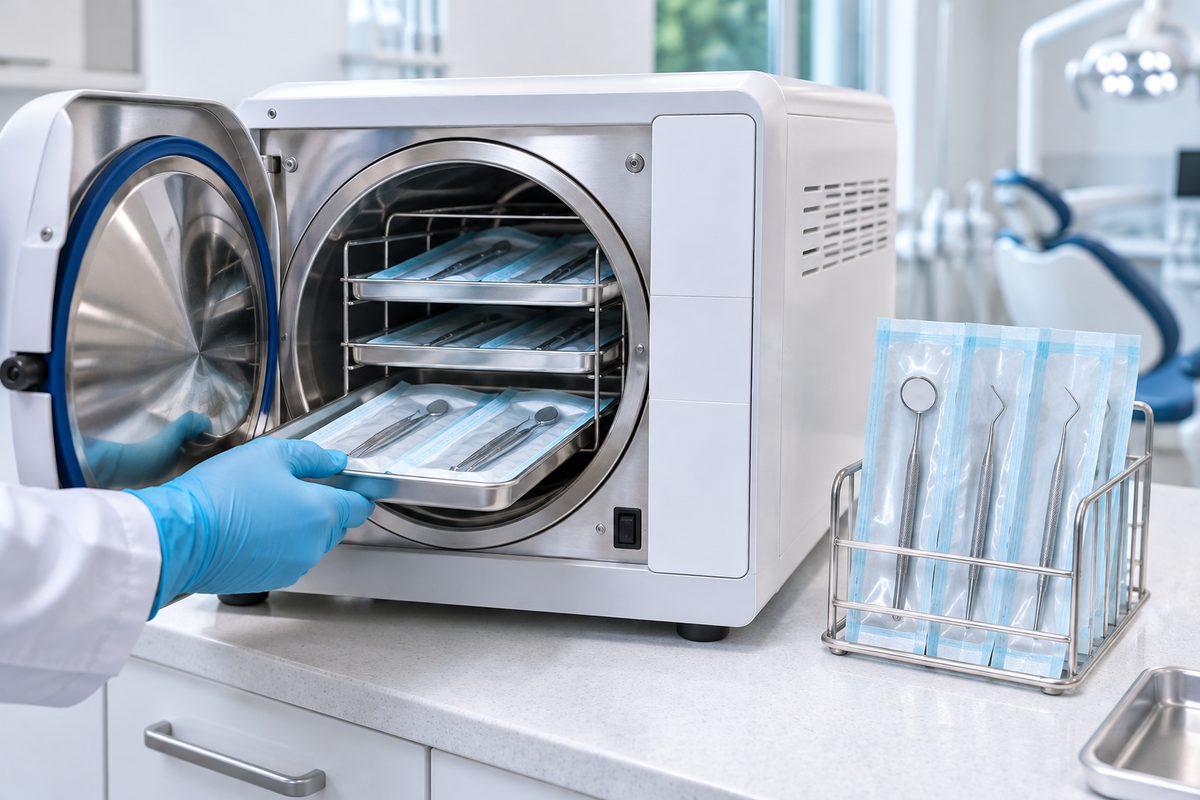
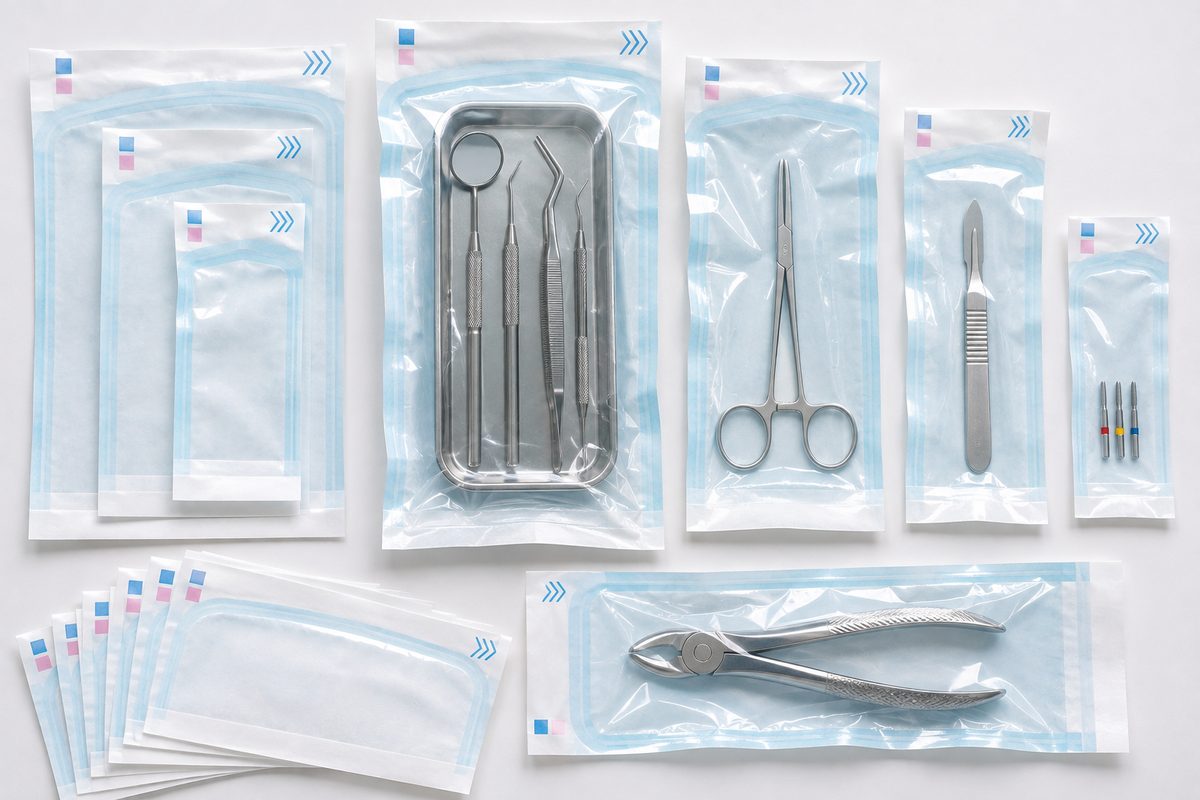
Dry instruments are sealed in heat-seal or self-sealing pouches and autoclaved. See dental instrument sterilization and how to use sterilization pouches.
7Frequently asked questions
Does an ultrasonic cleaner sterilize instruments?
No. It cleans by removing debris. Instruments must still be packaged and sterilized afterwards.
What frequency is best for dental ultrasonic cleaners?
Most dental and medical units operate between about 25 and 45 kHz, a range suited to removing debris from instruments without damaging them.
How often should ultrasonic cleaning solution be changed?
At least once a day, and sooner if it becomes visibly cloudy or contaminated.