1What are standard precautions?
Standard precautions are the minimum infection prevention practices that apply to all patient care, in any setting. They replaced "universal precautions" (which focused on blood) by covering all body fluids, non-intact skin and mucous membranes. Transmission-based precautions — contact, droplet and airborne — are added when a specific infection is known or suspected.
2The elements of standard precautions in dental care
- Hand hygiene before and after every patient and after removing gloves.
- Personal protective equipment — gloves, surgical mask, protective eyewear or face shield, protective clothing.
- Respiratory hygiene and cough etiquette — signage, masks for coughing patients, distancing in waiting rooms.
- Sharps safety — engineering controls, one-handed recapping, puncture-proof containers.
- Safe injection practices — single-dose vials, one needle and syringe per patient.
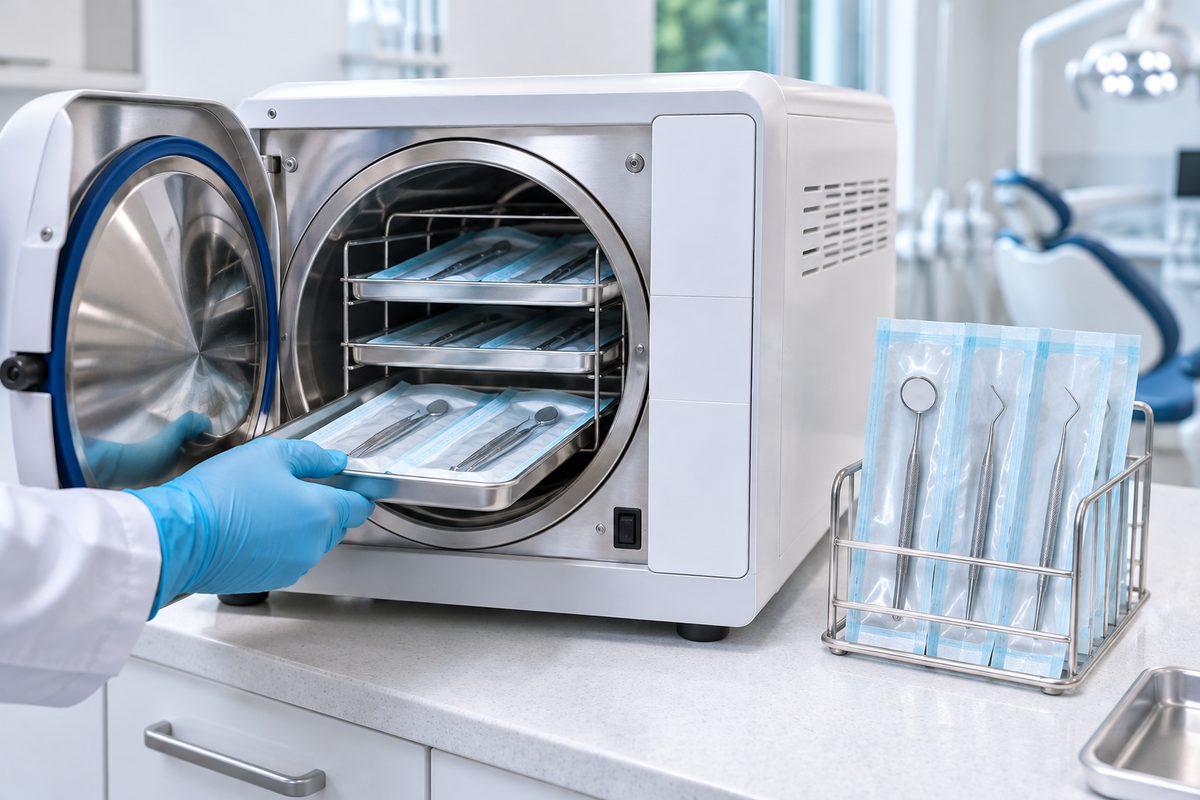
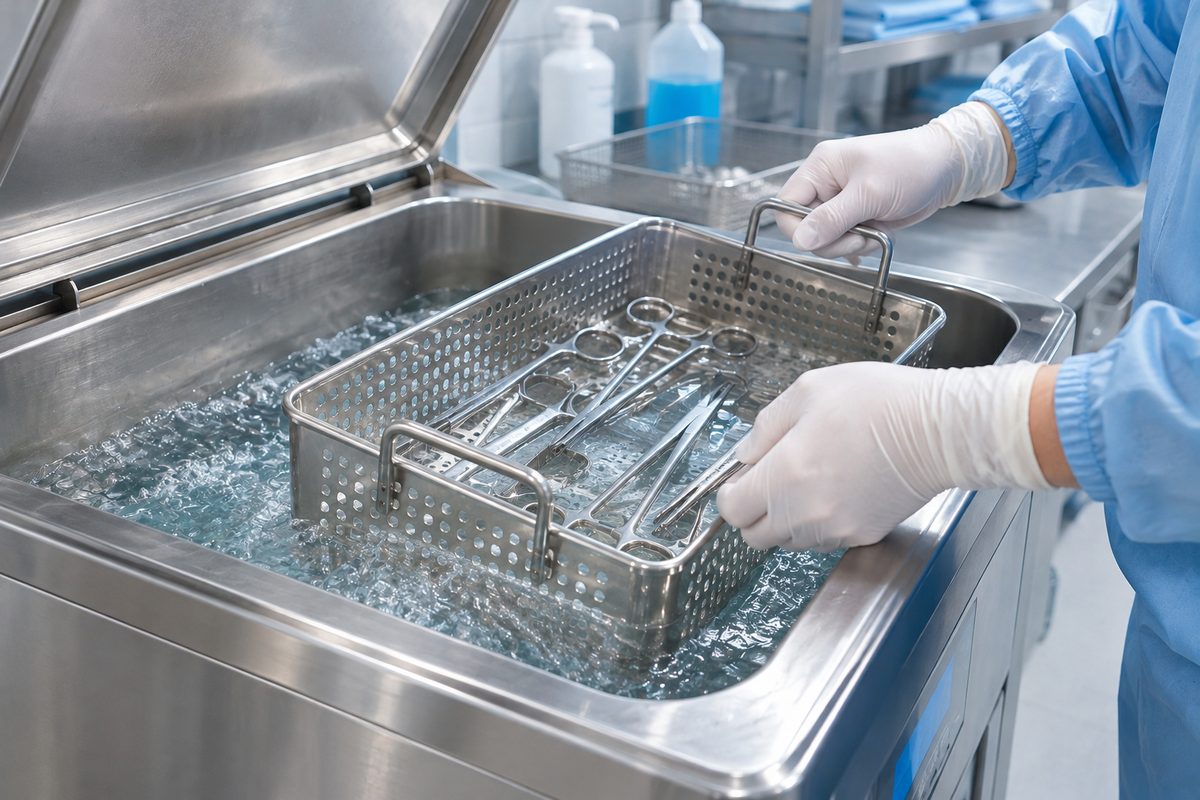
- Sterilization and disinfection of patient-care items — see the dental instrument sterilization guide.
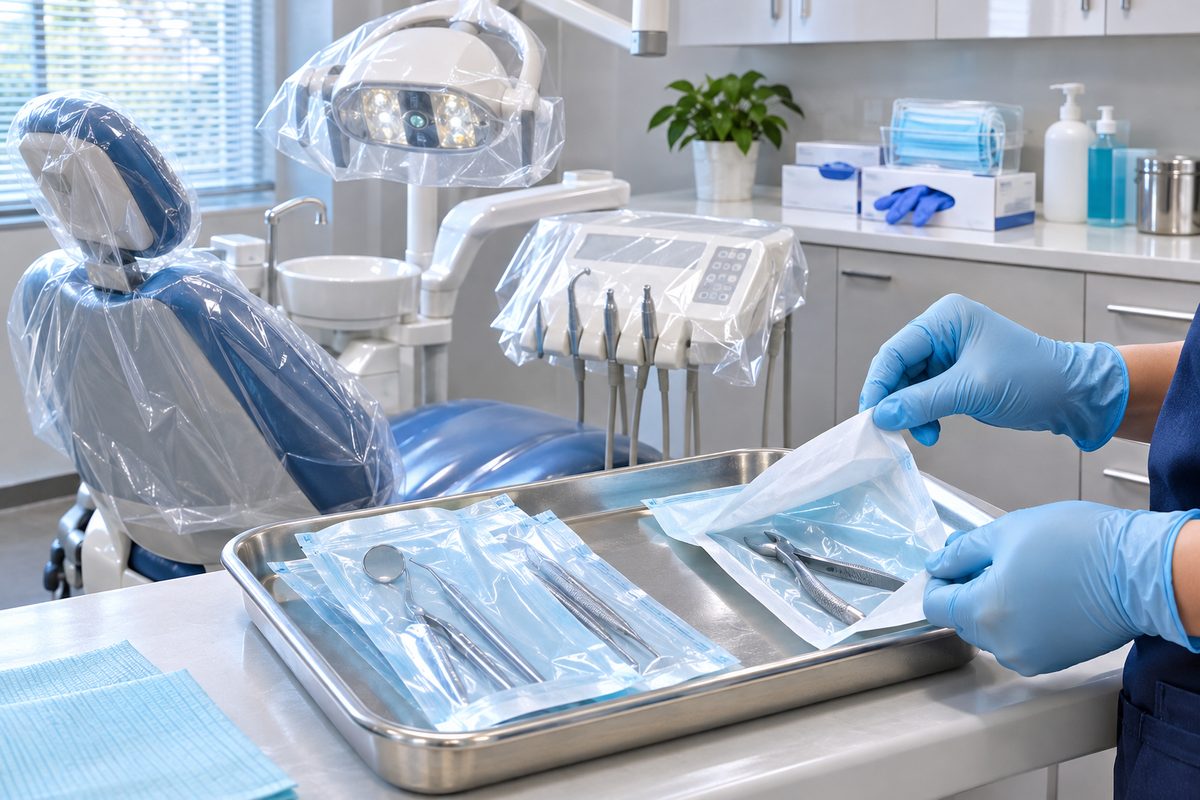
- Environmental infection control — surface barriers or EPA-registered disinfectants on clinical contact surfaces.
- Dental unit water quality — ≤500 CFU/mL heterotrophic bacteria.
3What do dentists wear?
| Item | When | Notes |
|---|---|---|
| Gloves | Every patient contact | New pair per patient; never washed and reused |
| Surgical mask | Procedures with spray or splatter | Change between patients or when wet |
| Eye protection / face shield | Spray-generating procedures | Side shields; clean between patients |
| Gown / lab coat | Expected contamination of clothing | Remove before leaving the work area |
4Dental OSHA compliance checklist
- Written exposure control plan reviewed annually.
- Annual bloodborne pathogens training with records.
- Hepatitis B vaccination offered to at-risk staff.
- Sharps injury log and post-exposure protocol.
- Hazard communication (SDS for disinfectants and sterilants).
- Sterilizer monitoring log: chemical indicators every load, spore tests weekly.
- Regulated waste handling and labelled containers.
5The sterilization part of the checklist
Most inspection findings in dental practices relate to instrument processing: unpackaged instruments, missing indicators, no spore test records or instruments stored under sinks. Using self-sealing pouches with printed indicators, an internal Class 4 strip and a weekly spore test closes most of those gaps.
6Frequently asked questions
When must standard precautions be used?
For every patient, in every care situation, regardless of the patient's diagnosis or known infection status.
What are the 10 principles of infection control?
Commonly listed principles are hand hygiene, PPE, respiratory hygiene, sharps safety, safe injection practices, instrument sterilization and disinfection, environmental cleaning, waste management, patient placement and staff education/immunization.
What PPE do dentists wear?
Gloves, a surgical mask, protective eyewear or a face shield, and protective clothing such as a gown or lab coat, selected according to the expected exposure.
Is OSHA training required for dental offices?
Yes. OSHA requires initial and annual bloodborne pathogens training for all employees with occupational exposure, with documented records.