1What is ethylene oxide?
Ethylene oxide (C₂H₄O, also called oxirane or epoxyethane) is a reactive cyclic ether produced industrially by catalytic oxidation of ethylene with oxygen over a silver catalyst. Most of the world's output is used to make ethylene glycol, surfactants and plastics; a small but critical share is used to sterilize medical devices and some spices. In healthcare, "EO" and "EtO" both stand for ethylene oxide — and a device label reading "STERILE EO" means it was sterilized with ethylene oxide.
2How does EO sterilization work?
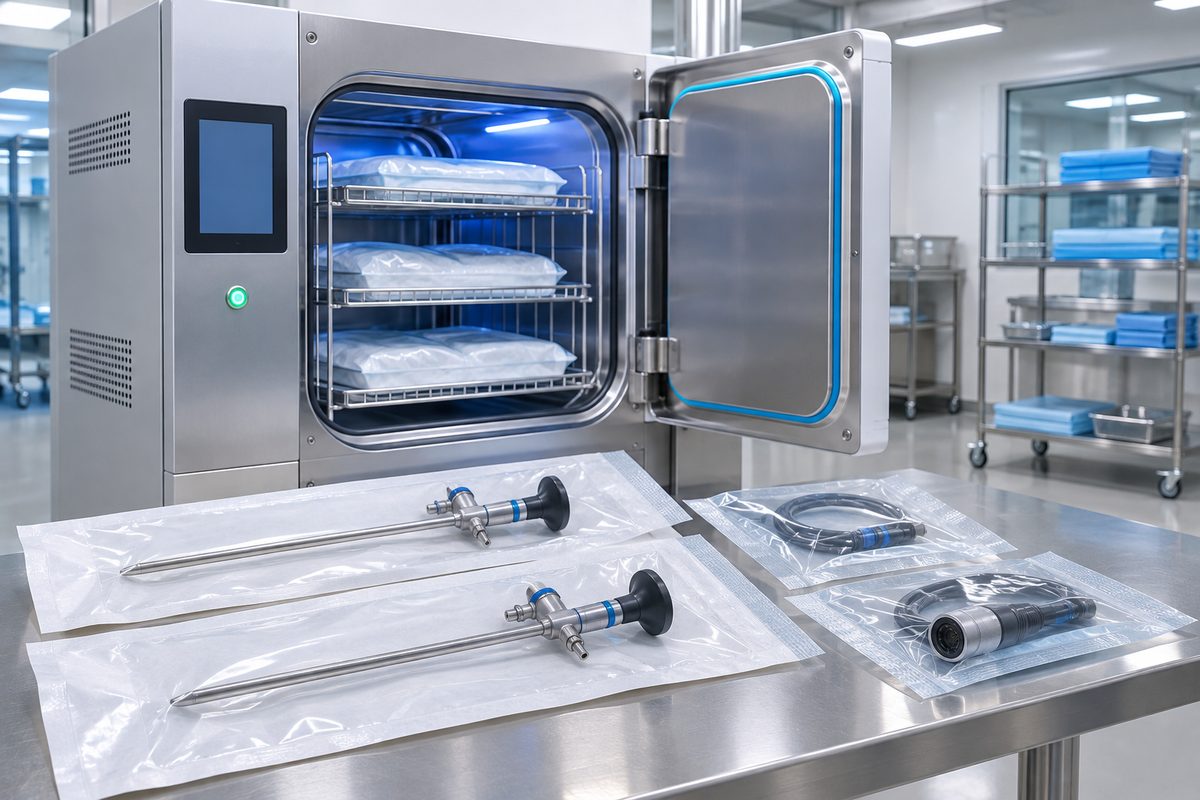
Ethylene oxide alkylates the amino, carboxyl, hydroxyl and sulfhydryl groups of proteins and nucleic acids, preventing cells from metabolizing and reproducing. Because it is a gas, it diffuses through breathable packaging and into lumens, joints and porous materials that steam cannot safely reach, and it does so at temperatures that do not damage plastics, electronics or adhesives.
3The EO sterilization process
- Preconditioning — the load is held at controlled temperature and humidity so that spores are hydrated and susceptible.
- Conditioning in the chamber — vacuum is drawn, humidity is injected.
- Gas injection — pure EO or an EO blend is introduced to the target concentration.
- Exposure — held for the validated time (typically 1–6 hours).
- Evacuation and air washes — gas is removed and catalytically destroyed or scrubbed.
- Aeration — heated aeration (often 8–12 h in hospitals, up to several days industrially) lets residual EO and ethylene chlorohydrin diffuse out to the limits in ISO 10993-7.
4Typical cycle parameters
| Variable | Typical range |
|---|---|
| Temperature | 37–63 °C (hospital cycles often 37 °C or 55 °C) |
| Relative humidity | 40–80 % |
| EO concentration | 450–1,200 mg/L |
| Exposure time | 1–6 h |
| Aeration | 8 h at 60 °C to 12 h at 50 °C (hospital); longer industrially |
5Advantages and disadvantages
- Advantages — low temperature, excellent penetration, compatible with most polymers, validated for complex and long-lumen devices.
- Disadvantages — long total cycle time, toxic and carcinogenic gas, flammable, requires emission controls and worker exposure monitoring. Regulators including the US EPA have tightened emission and exposure rules for EO facilities, so many hospitals now prefer VH2O2 where devices allow.
How much exposure to ethylene oxide is dangerous? Occupational limits are very low — the US OSHA permissible exposure limit is 1 ppm as an 8-hour time-weighted average with a 5 ppm excursion limit — which is why EO sterilizers must be installed and vented by specialists.
6Packaging for EO sterilization
EO needs breathable packaging: medical paper/film pouches and reels, Tyvek® or dialysis-paper header pouches, and SMS wrap. Kangde Med's EO dialysis film pouches are designed for finished-device manufacturers, and our self-sealing and heat-seal pouches carry a printed EO indicator that turns from pink to yellow.
7Monitoring and validation
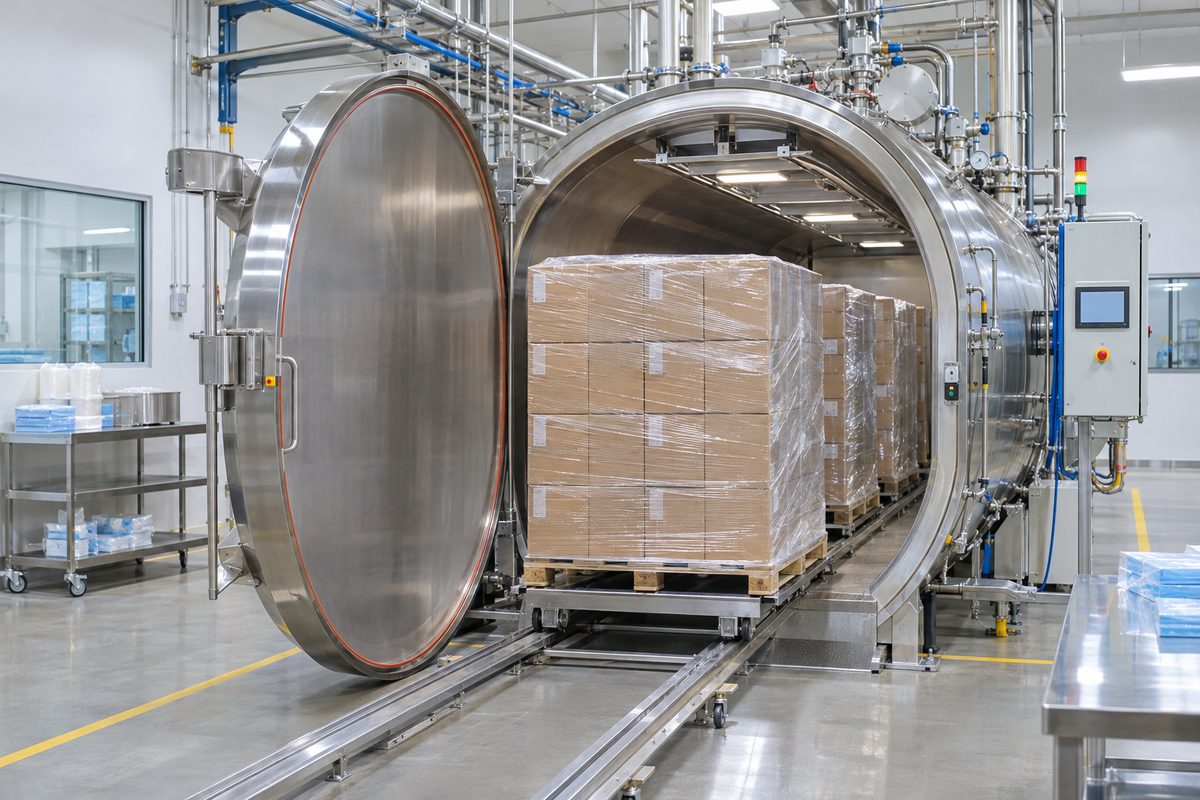
- Industrial EO processes are validated to ISO 11135 (installation, operational and performance qualification) and released by parametric release or biological indicators.
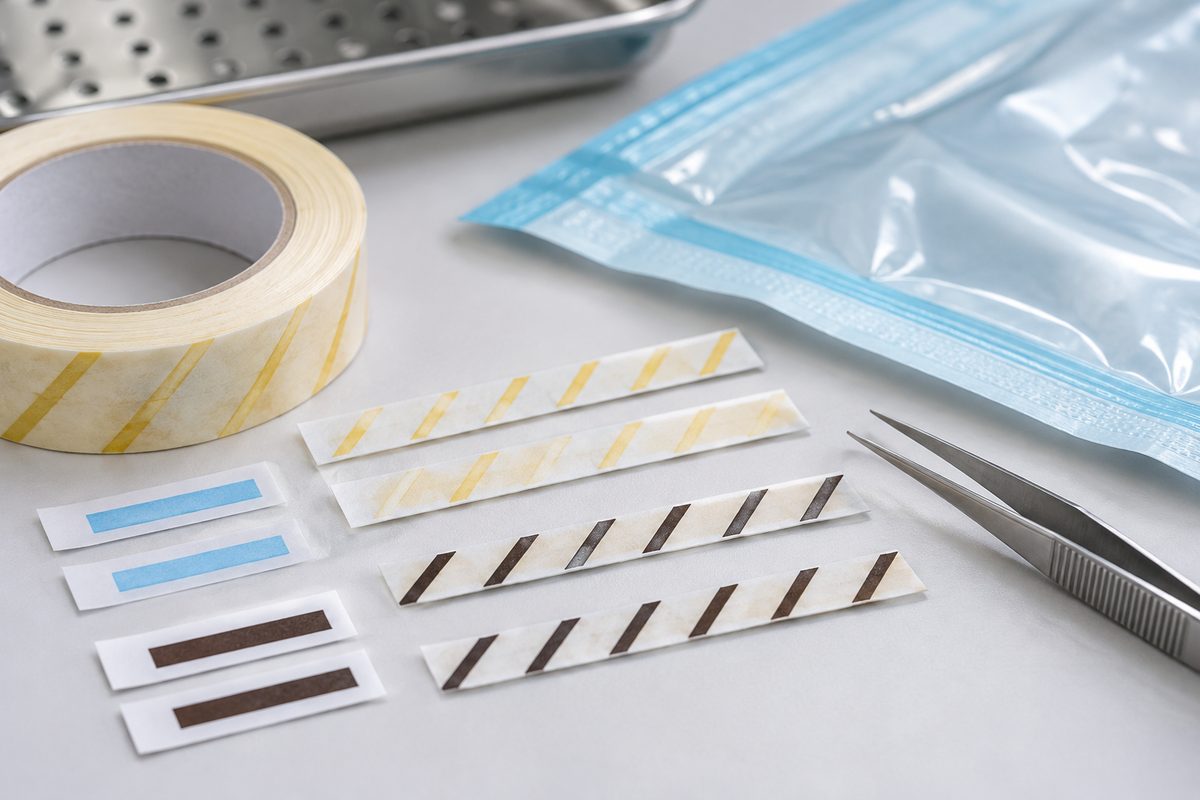
- Each pack should carry an EO process indicator — EO indicator tape or a pouch indicator — and critical packs an internal EO indicator strip. Read how to read EO chemical indicators.
- Biological indicators use spores of *Bacillus atrophaeus*.
8EO vs other low-temperature methods
Compared with hydrogen peroxide plasma, EO penetrates better and tolerates cellulose packaging but takes far longer. Compared with radiation, it is gentler on many polymers but leaves residues that must be aerated.
9Frequently asked questions
What does EtO stand for in medical terms?
EtO stands for ethylene oxide, a low-temperature sterilant gas used for heat-sensitive medical devices.
What does "Sterile EO" mean on a medical device label?
It means the device was sterilized using ethylene oxide. The ISO 15223-1 symbol is the word STERILE followed by EO in a box.
Is ethylene oxide a carcinogen?
Yes. Ethylene oxide is classified as a known human carcinogen by IARC and the US EPA, which is why exposure limits and aeration requirements are strict.
How long does EO sterilization take?
The sterilization phase takes about 1–6 hours, but with preconditioning and aeration a complete hospital cycle often takes 12–16 hours and industrial processes several days.
What colour do EO indicators change?
It depends on the ink. Kangde Med EO tape changes from orange to green, the EO strip from red to blue and the pouch EO indicator from pink to yellow.