1What is terminal sterilization?
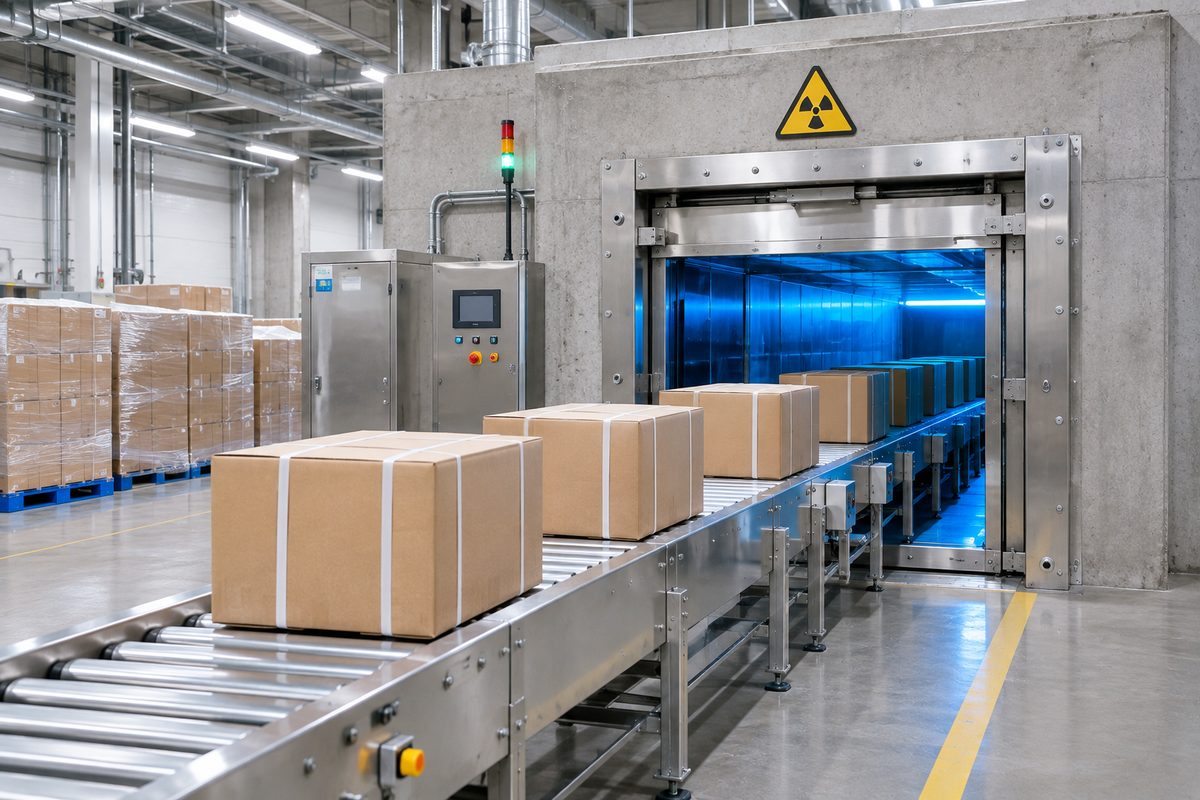
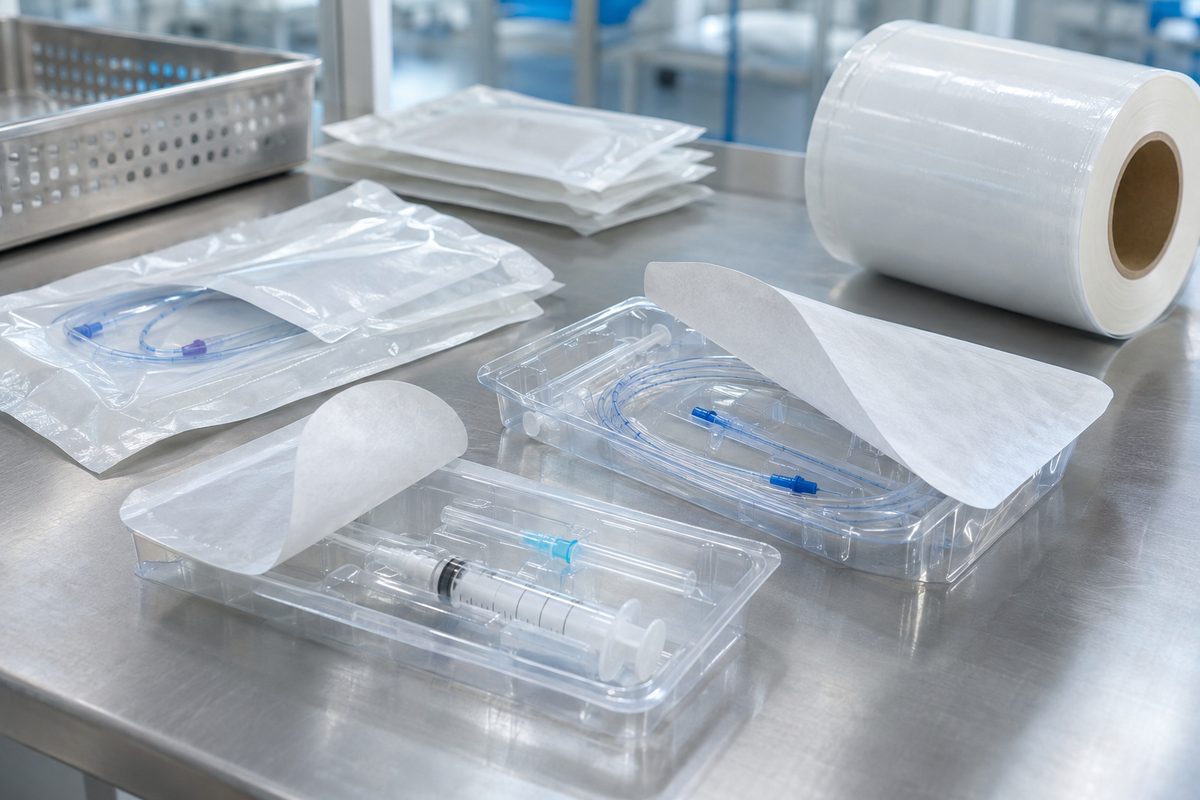
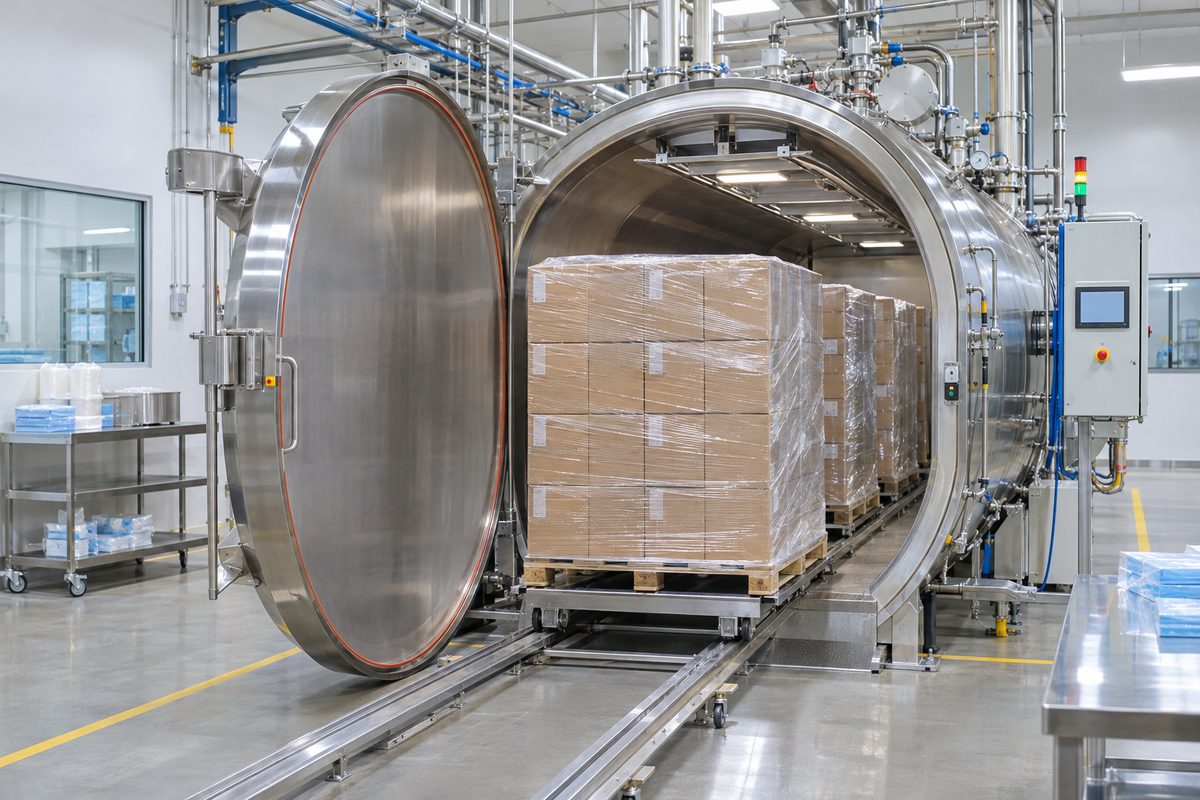
Terminal sterilization means the device is sterilized after it has been sealed in its final sterile barrier system — pouch, blister or tray. It is preferred over aseptic processing because it achieves a higher, measurable SAL.
2Methods compared
| Method | Standard | Typical share | Strengths | Watch-outs |
|---|---|---|---|---|
| Ethylene oxide | ISO 11135 | ~50 % | Material compatibility, complex devices | Residuals (ISO 10993-7), long cycles, emissions |
| Gamma | ISO 11137 | ~40 % with e-beam | Penetration, immediate release | Polymer degradation, Co-60 supply |
| E-beam | ISO 11137 | — | Very fast | Limited penetration |
| X-ray | ISO 11137 | Growing | Penetration + control | Fewer facilities |
| Steam | ISO 17665 | Small | Cheap, no residues | Heat/moisture-stable devices only |
| VH2O2 | ISO 22441 | Growing | Low temperature, no residues | Material and lumen limits |
3Validation in practice
- Product adoption — define the product family and worst-case configuration.
- Bioburden — determine microbial load on the product (ISO 11737-1).
- Installation and operational qualification — the equipment works as specified.
- Performance qualification — microbiological (half-cycle or verification dose) and physical qualification.
- Routine control and release — BIs, dosimeters or parametric release.
- Revalidation — annually or after changes.
4Packaging must be validated too
ISO 11607-1 requires that materials are compatible with the sterilization method, and ISO 11607-2 requires validated sealing processes. Run seal strength (ASTM F88) and integrity tests after sterilization and accelerated aging. Read our medical device packaging guide.
5Working with contract sterilization services
Most device companies outsource sterilization. Ask contract sterilizers for capacity, validation support, dosimetry or BI services, turnaround time and audit reports. Ask your packaging supplier for material certificates, sterilization compatibility data and lot traceability.
6How Kangde Med supports manufacturers
We supply medical coated paper, dialysis paper, PET/CPP and PET/PE lidding films, PP/PE and PA/PE blister films, EO dialysis film pouches and EO indicators, with custom widths, printing and ISO 11607-1 documentation. See our solutions for medical device manufacturers.
7Frequently asked questions
What is the most common sterilization method for medical devices?
Ethylene oxide, used for roughly half of all sterile medical devices, followed by gamma and electron-beam radiation.
What is sterilization validation?
Documented evidence, under the relevant ISO standard, that a sterilization process consistently delivers the required sterility assurance level for a defined product and packaging.
How often must sterilization be revalidated?
Typically annually (requalification) and whenever there is a significant change to the product, packaging, load pattern or equipment.
Do I need to validate the packaging separately?
Yes. ISO 11607 requires validation of materials, sealing processes and package integrity after sterilization, transport and aging.