1What is cold sterilization?
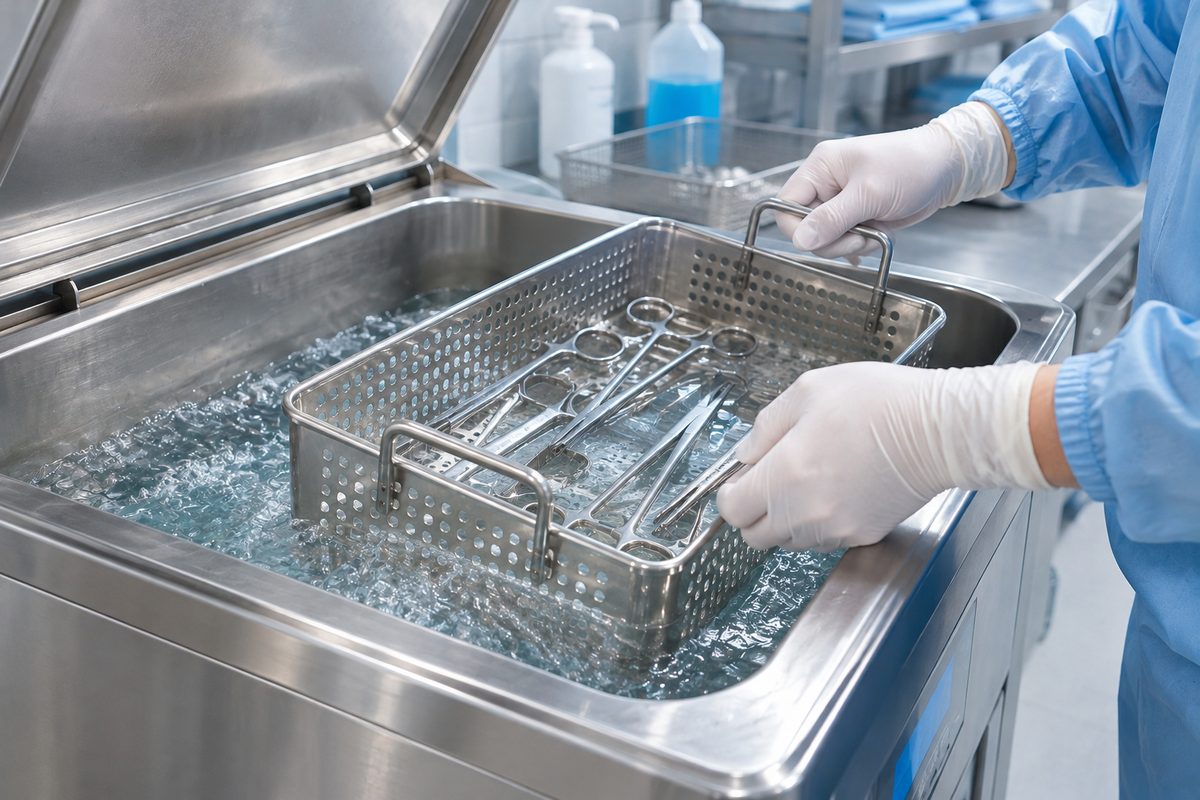
The term describes sterilization without heat, usually by soaking cleaned instruments in a liquid chemical sterilant. Many products are labelled as both high-level disinfectant (short contact) and sterilant (long contact).
| Sterilant | Sterilization contact time | HLD contact time | Notes |
|---|---|---|---|
| Glutaraldehyde ≥2 % | ~10 h at 20–25 °C | 20–90 min | Irritant; needs ventilation |
| Hydrogen peroxide 7.5 % | ~6 h | 30 min | Can damage some metals |
| Peracetic acid (automated systems) | ~12 min at 50–56 °C | — | Just-in-time processing |
| Ortho-phthalaldehyde (OPA) | Not a sterilant | 5–12 min | HLD only |
2Cold sterilization in dentistry
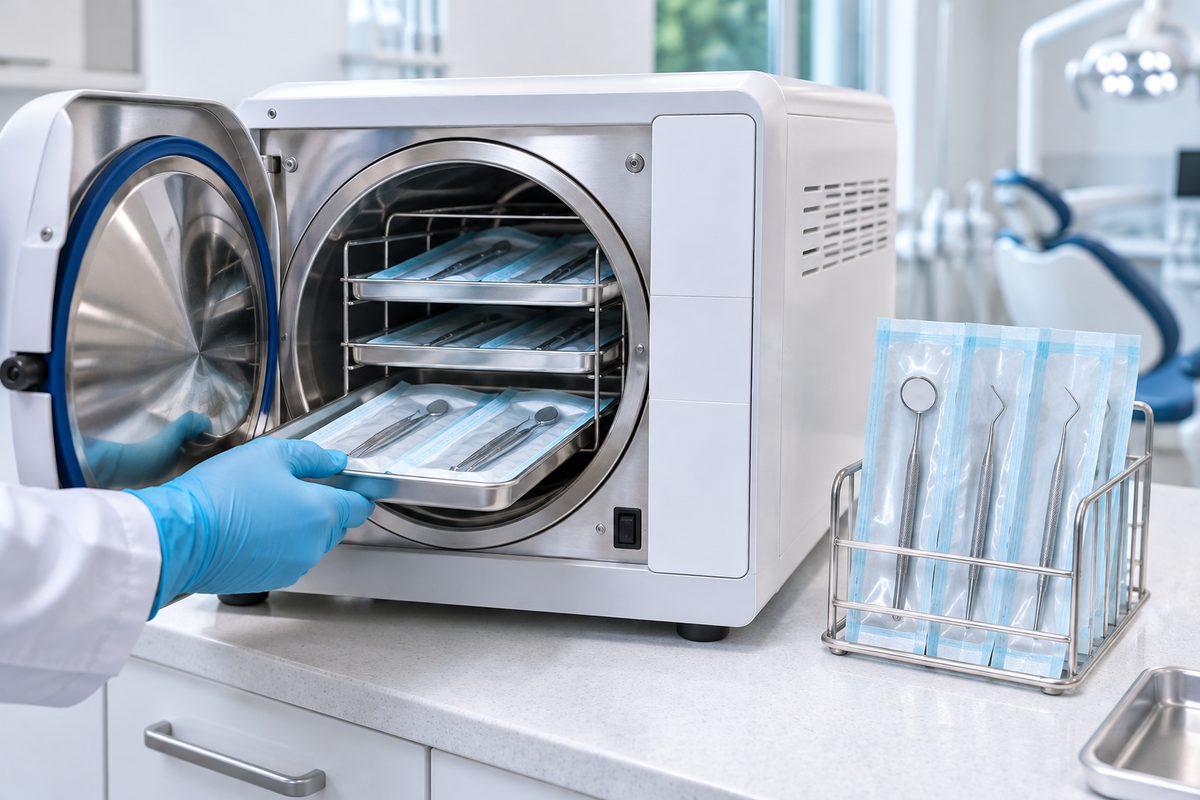
Historically dental offices used "cold sterile" trays for burs and instruments. Today the CDC's dental guidelines state that heat-tolerant critical and semicritical instruments must be heat-sterilized, and liquid sterilants should be reserved for heat-sensitive items. Cold soaks cannot be biologically monitored like autoclave cycles and leave items unpackaged and wet. See our dental instrument sterilization guide.
3Limitations
- No packaging — items must be used immediately after rinsing.
- No routine biological monitoring.
- Chemical exposure risk for staff.
- Solution concentration must be checked with test strips and changed per the label.
4Ozone and other chemical methods
Ozone sterilizers generate ozone from oxygen and water inside a chamber at about 30–36 °C; they are a gas-phase low-temperature method with their own validated packaging and indicators. Chemical vapour (unsaturated formaldehyde-alcohol) sterilizers, once common in dentistry, run at about 132 °C. Low-temperature steam-formaldehyde (LTSF) is still used in parts of Europe and Asia and is monitored with formaldehyde indicator strips.
5Bottom line
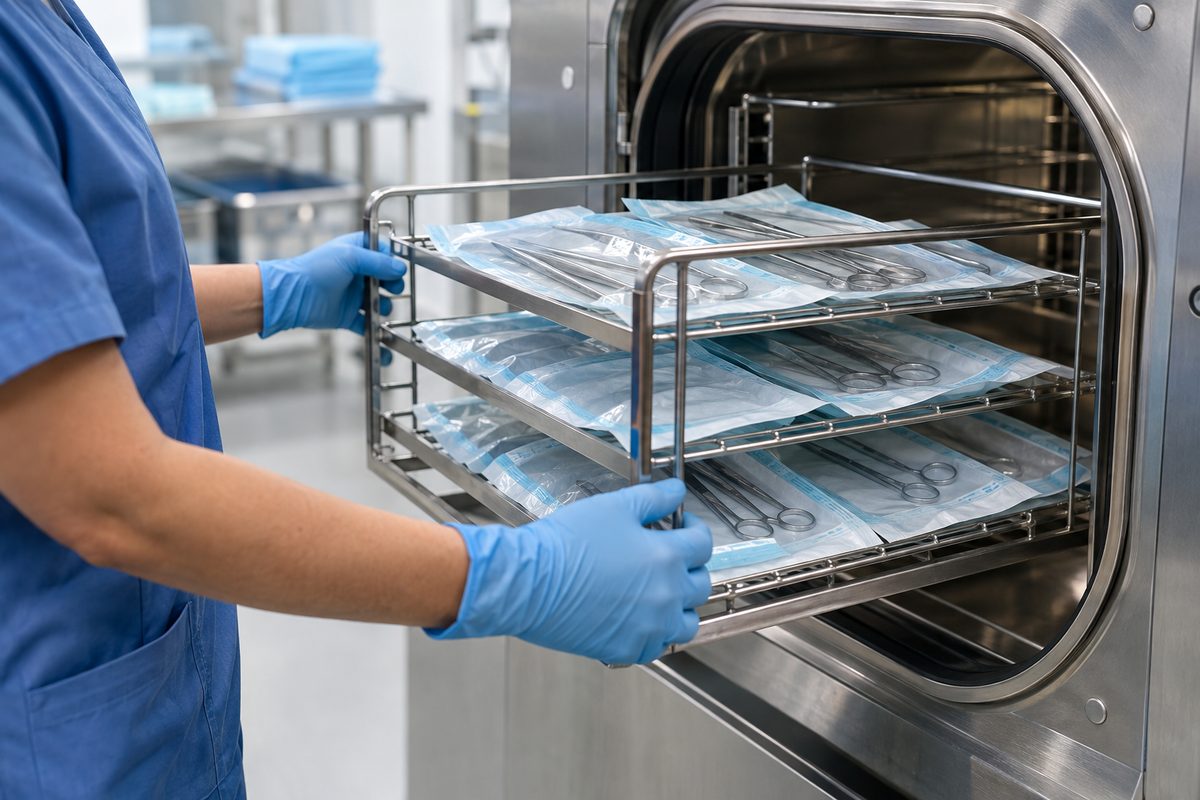
Whenever the IFU allows, pack instruments in sterilization pouches and autoclave them: the process is faster, monitorable and keeps items sterile until use.
6Frequently asked questions
Is cold sterilization effective?
A cleared liquid sterilant used at the labelled concentration, temperature and contact time can sterilize, but the item is wet and unpackaged afterward and cannot be stored sterile.
Is cold sterilization allowed in dental offices?
Only for heat-sensitive items. CDC guidelines require heat sterilization for all heat-tolerant critical and semicritical dental instruments.
What solution is used for cold sterilization?
Common sterilants include 2 % or higher glutaraldehyde, 7.5 % hydrogen peroxide and peracetic acid formulations, used exactly as labelled.