1Material comparison
| Property | Medical paper/film | Tyvek®/film |
|---|---|---|
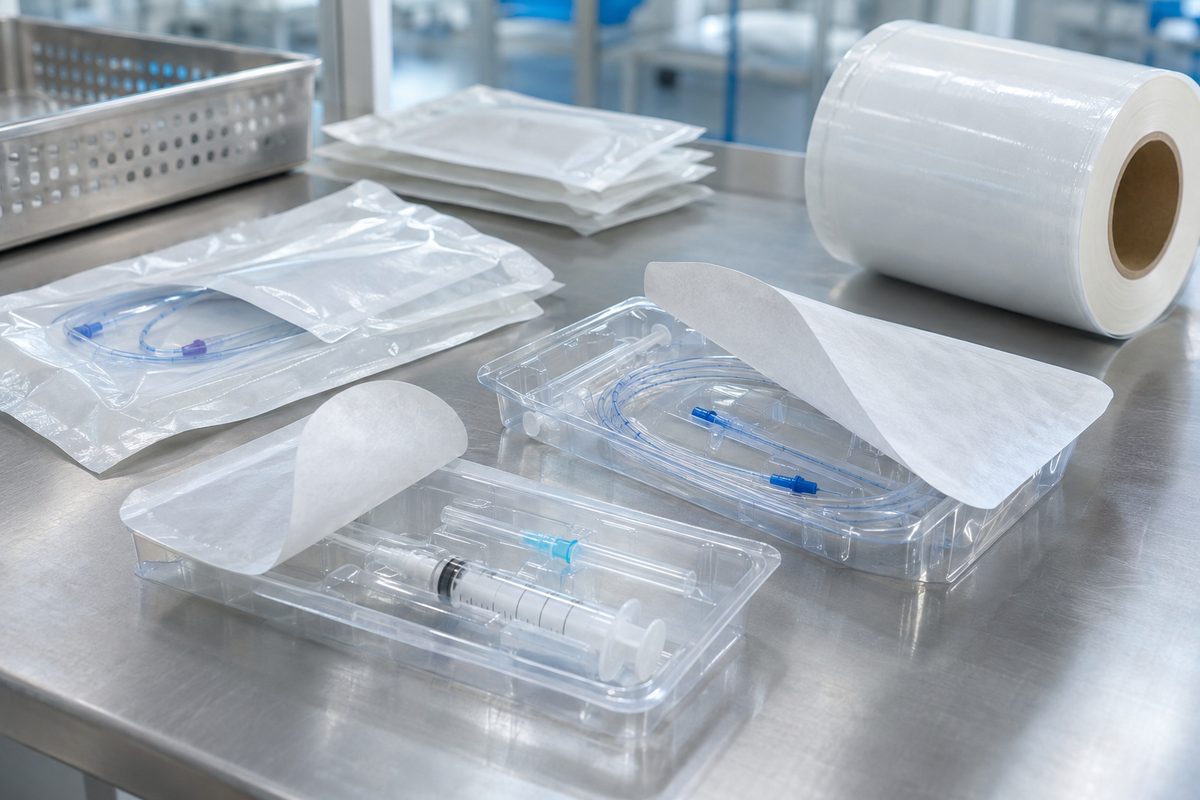
| Porous material | Medical-grade paper 60–70 g/m² | Spunbonded HDPE (e.g. Tyvek® 1073B) |
| Steam 121–134 °C | Yes | No (melts/deforms above ~127 °C) |
| Ethylene oxide | Yes | Yes |
| H₂O₂ plasma / VH2O2 | No | Yes |
| Radiation | Yes | Yes |
| Puncture and tear resistance | Good | Excellent |
| Lint/particles | Low | Very low |
| Cost | Lower | Higher |
Tyvek® is a registered trademark of DuPont; equivalent spunbonded polyolefin materials are also used.
2Choosing by sterilization method
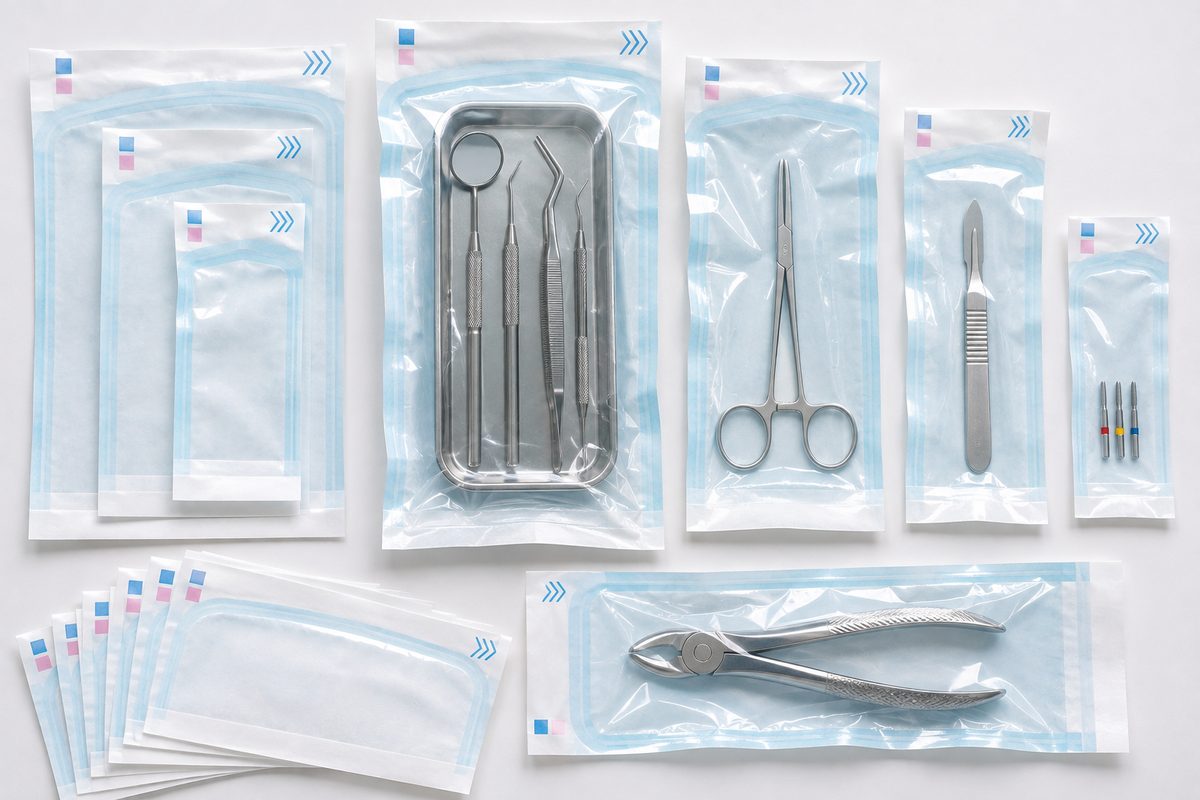
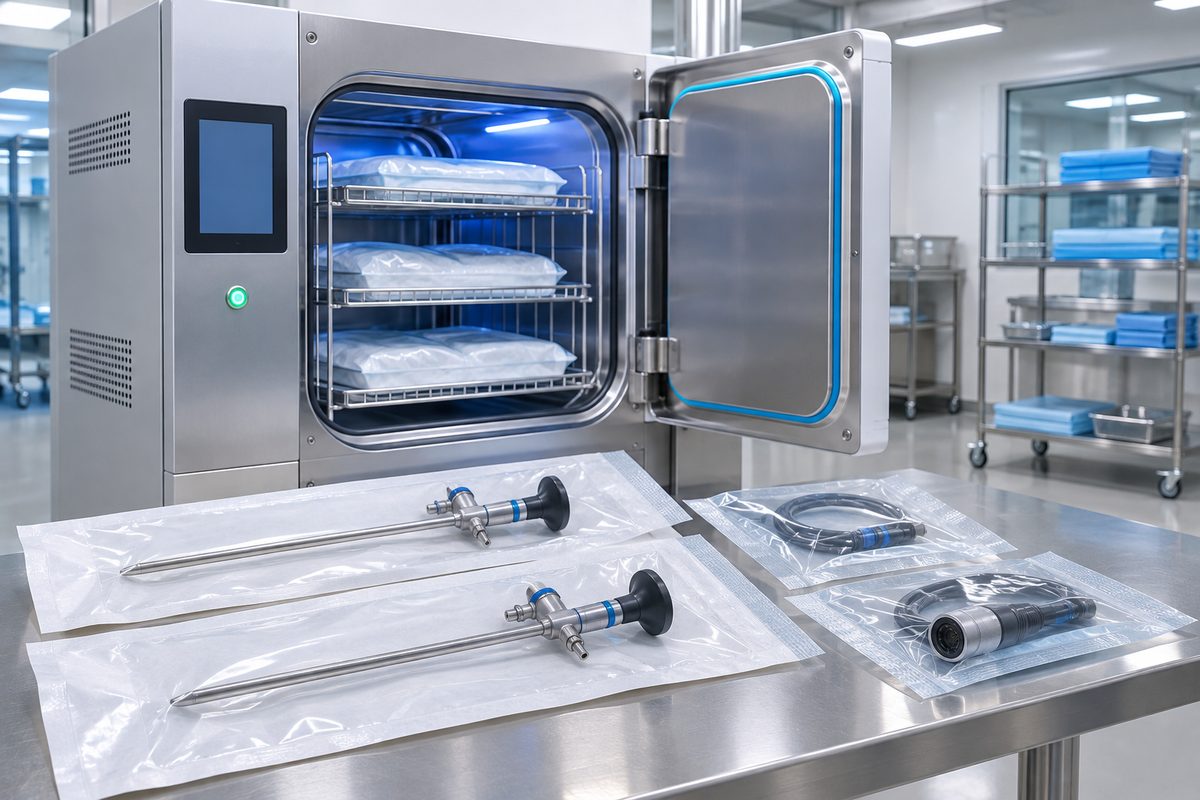
- Steam autoclave — paper/film pouches and reels (self-seal, heat-seal).
- Hydrogen peroxide plasma — Tyvek®/film pouches or polypropylene wrap; see VHP and plasma sterilization.
- EO — either; device manufacturers often use dialysis-paper header pouches.
- Radiation — either, plus non-porous foil or film for some products.
3Indicators for each
Use plasma indicator tape and plasma indicator strips with Tyvek® loads, and steam indicators with paper/film loads in steam. Pouch printed indicators must match the sterilant too.
4Cost-saving tip for hospitals
Keep Tyvek® packaging only for items that truly require low-temperature sterilization; everything heat-stable should go in paper/film pouches through steam.
5Frequently asked questions
Can Tyvek pouches be autoclaved?
Standard Tyvek® pouches are not suitable for steam sterilization at 121–134 °C. Use paper/film pouches for steam.
Why can't paper pouches be used in plasma sterilizers?
Cellulose absorbs hydrogen peroxide, which lowers sterilant concentration and usually aborts the cycle.
Are Tyvek pouches suitable for EO sterilization?
Yes. Tyvek® is highly permeable to EO and is widely used for EO-sterilized medical devices.