1Definitions at a glance
| Process | What it kills | Typical agents | Used for |
|---|---|---|---|
| Cleaning | Removes soil and most microbes physically | Detergent, enzymatic cleaner, ultrasonic | Always the first step |
| Sanitization | Reduces bacteria to safe levels (≈99.9 %) | Food-contact sanitizers, hot water | Food-service and public surfaces |
| Low-level disinfection | Most vegetative bacteria, some viruses and fungi | Quaternary ammonium, alcohols | Noncritical items (blood-pressure cuffs, floors) |
| High-level disinfection (HLD) | All vegetative microbes, mycobacteria, viruses, fungi; some spores | Glutaraldehyde, OPA, peracetic acid, hydrogen peroxide | Semicritical items (flexible endoscopes, probes) |
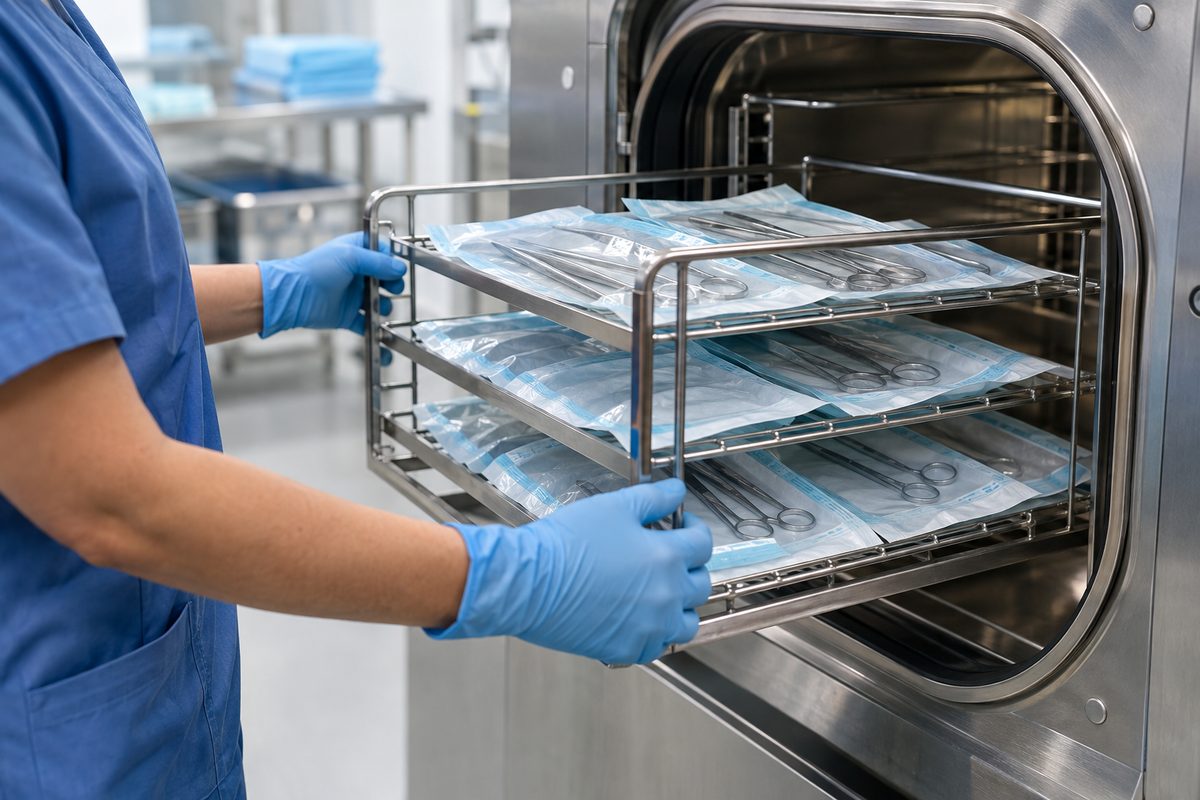
| Sterilization | All microbial life including spores | Steam, dry heat, EO, VH2O2, radiation | Critical items (surgical and dental instruments) |
The process that completely destroys all microorganisms — the answer to the classic exam question "which action destroys all viruses and spores?" — is sterilization.
2The Spaulding classification
Dr Earle Spaulding's 1968 scheme is still used by the CDC and most national guidelines:
- Critical items enter sterile tissue or the vascular system — scalpels, forceps, implants, dental extraction instruments, periodontal scalers. They must be sterilized.
- Semicritical items contact mucous membranes or non-intact skin — mouth mirrors, impression trays, endoscopes. They need at least high-level disinfection, and heat-tolerant semicritical dental instruments should be heat-sterilized anyway.
- Noncritical items touch intact skin only — stethoscopes, bed rails. Low- or intermediate-level disinfection is enough.
3High-level disinfection vs sterilization
HLD is often used for items that cannot survive heat. The difference is not just the spore kill: sterilized items are packaged and can be stored sterile, while disinfected items are wet, unpackaged and must be used immediately or dried and stored to avoid recontamination. Many liquid chemicals act as a disinfectant at short contact times and a sterilant at long times — for example glutaraldehyde needs around 10 hours for sterilization but 20–45 minutes for HLD.
Does hydrogen peroxide sterilize? Liquid 3 % hydrogen peroxide is a disinfectant, not a sterilant. Vaporized hydrogen peroxide at controlled concentration in a sealed chamber is a validated sterilant — see our guide to hydrogen peroxide plasma sterilization.
4Why cleaning comes first
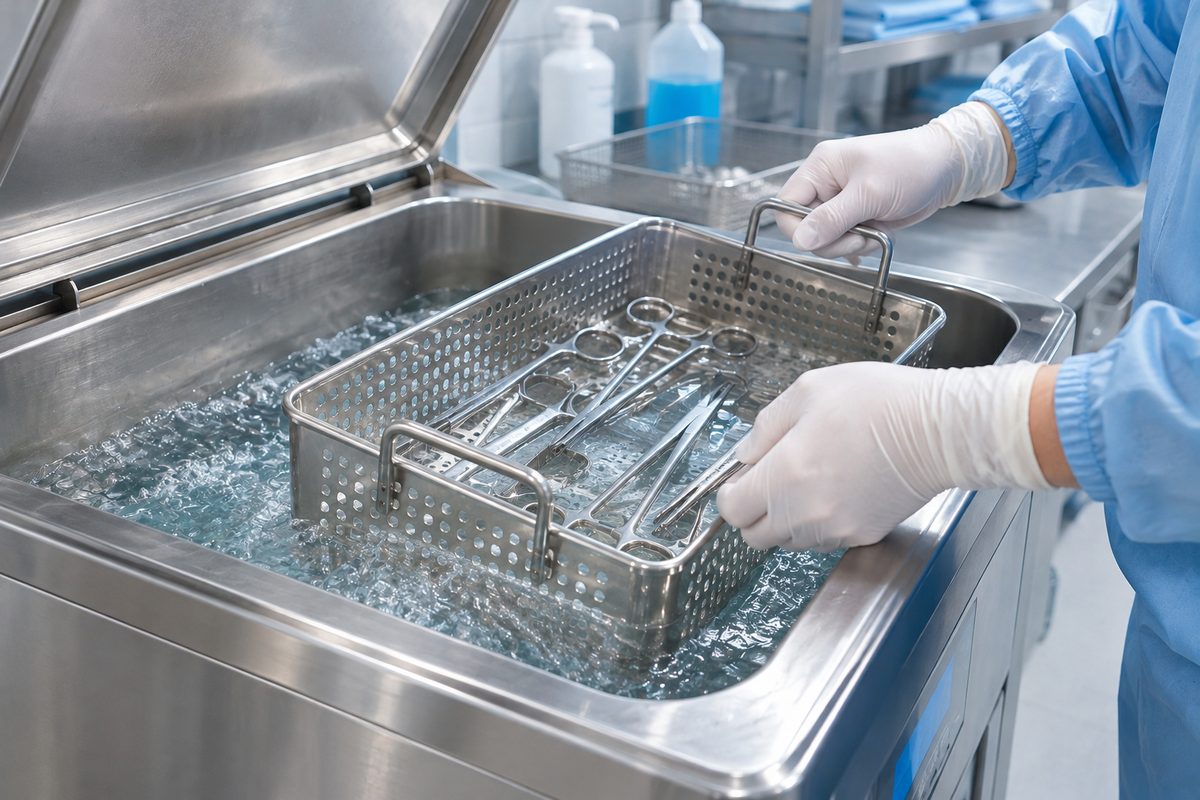
Organic soil shields microorganisms and inactivates chemicals. Every guideline — CDC, AAMI ST79, ISO 17664 — requires thorough cleaning before disinfection or sterilization. Read our step-by-step guide to cleaning and sterilizing surgical instruments.
5How to choose the right process
- Classify the item with Spaulding.
- Check the manufacturer's instructions for use (IFU) for validated methods.
- Prefer steam sterilization for any heat-stable critical or semicritical item.
- Use low-temperature sterilization (EO, VH2O2) for heat-sensitive critical items.
- Monitor every sterilization cycle with chemical indicators and every week with biological indicators.
6Consumables that make sterilization verifiable
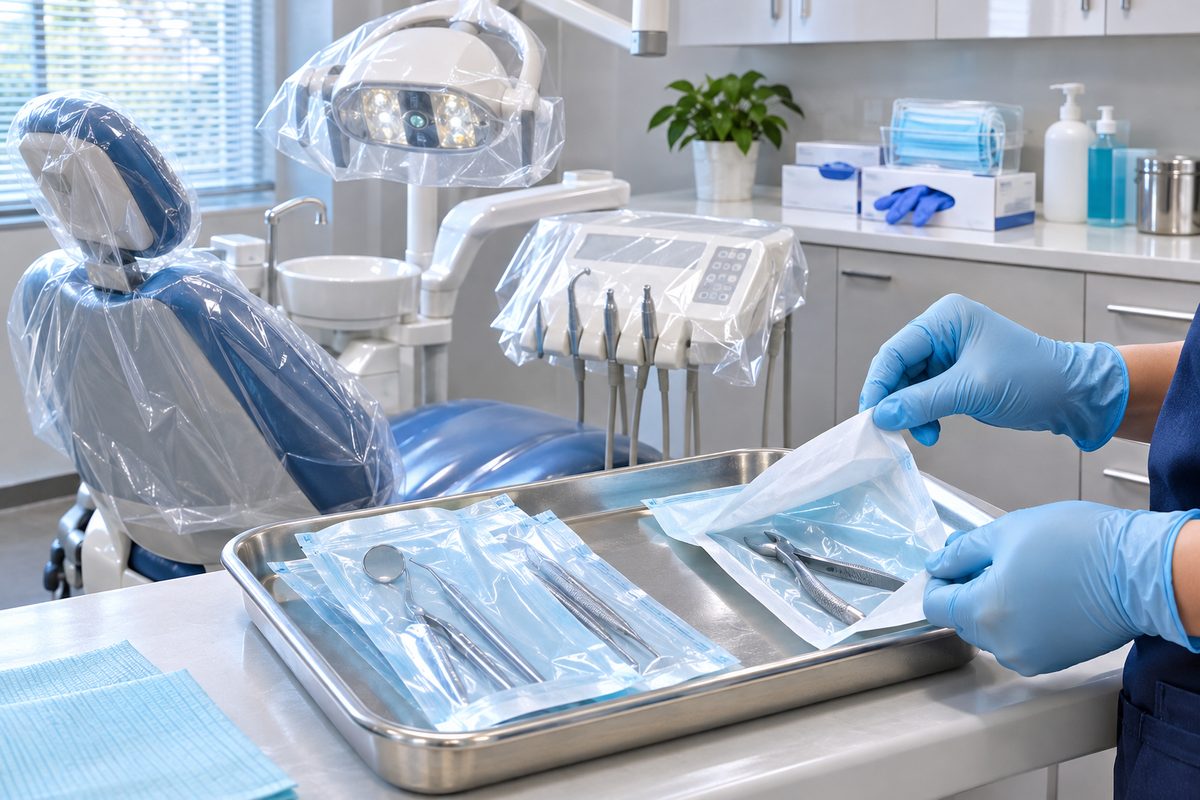
Unlike disinfection, sterilization leaves a record: the indicator tape on the outside of the pack, the indicator strip inside it and the pouch's printed process indicators. Kangde Med supplies steam indicator tape, Type 4/5/6 indicator strips and sterilization pouches to hospitals, dental clinics and distributors in more than 100 countries.
7Frequently asked questions
What is the main difference between sterilization and disinfection?
Sterilization kills all microorganisms including resistant bacterial spores; disinfection kills most pathogens but does not reliably kill spores.
Is sanitizing the same as disinfecting?
No. Sanitizing reduces bacteria on a surface to a level considered safe by public-health codes, usually a 99.9 % reduction. Disinfecting kills a broader range of pathogens, including many viruses and fungi.
Which instruments must be sterilized rather than disinfected?
Critical items — anything that penetrates soft tissue or bone or enters the bloodstream, such as surgical and dental extraction instruments and implants.
Can high-level disinfection replace sterilization?
Only for semicritical items that cannot be heat-sterilized. Critical items must always be sterilized.
Does alcohol sterilize instruments?
No. 70 % alcohol is an intermediate-level disinfectant. It does not kill bacterial spores and is not a sterilant.