1What does "sterilized" mean?
To sterilize something means to make it free of all living microorganisms — bacteria, viruses, fungi and the highly resistant bacterial endospores. The medical definition of sterilization in standards such as ISO 11139 is "a validated process used to render product free from viable microorganisms".
Because microbial death follows a logarithmic curve, nothing can be proven 100 % sterile by testing. Instead, sterility is expressed as a sterility assurance level (SAL). For medical devices that contact sterile tissue the accepted SAL is 10⁻⁶ — a probability of no more than one non-sterile item in one million.
2Why sterilization matters
Instruments that enter sterile tissue or the bloodstream — scalpels, forceps, implants, dental surgical instruments — are classed as critical items under the Spaulding classification. If they carry even a few spores, they can cause surgical-site infections, which remain one of the most common healthcare-associated infections. Sterilization is the only process that reliably removes that risk.
3The main sterilization methods
| Method | Typical conditions | Best for | Limitations |
|---|---|---|---|
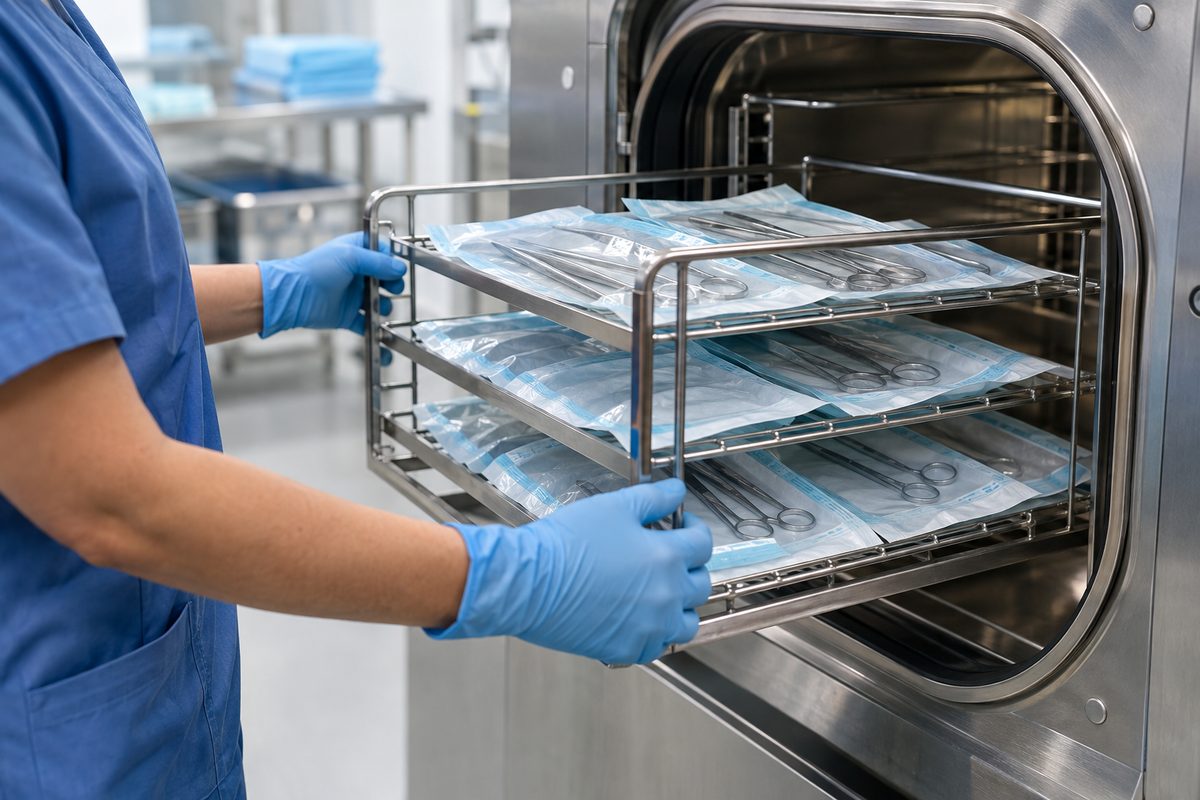
| Saturated steam (autoclave) | 121 °C for 15–30 min or 132–134 °C for 3–4 min | Surgical and dental instruments, textiles, glassware | Not for heat- or moisture-sensitive items |
| Dry heat | 160 °C for 2 h or 170 °C for 1 h | Powders, oils, glass, sharp instruments that corrode | Slow; high temperature |
| Ethylene oxide (EO) | 37–63 °C, 40–80 % RH, 1–6 h exposure + aeration | Heat-sensitive devices, complex lumens, single-use devices | Toxic gas; long aeration |
| Vaporized hydrogen peroxide / plasma | 45–55 °C, 28–75 min | Heat-sensitive endoscopes, cameras, electronics | No cellulose (paper) packaging; lumen limits |
| Radiation (gamma, e-beam, X-ray) | Typically 25 kGy | Industrial sterilization of single-use devices | Requires a specialist facility; some polymers degrade |
| Liquid chemical sterilants | e.g. peracetic acid or glutaraldehyde immersion | Items that cannot be packaged or heated | Items cannot be stored sterile |
Filtration is also used to sterilize heat-labile liquids (0.2 µm filters), but it removes rather than kills microorganisms and is used in pharmaceutical production rather than instrument reprocessing.
4How sterilization is achieved in practice
Sterilization standards require the use of heat, steam or a chemical or physical agent applied for a defined time at defined conditions — but the agent can only work on a clean surface. Every reprocessing cycle therefore follows the same sequence:
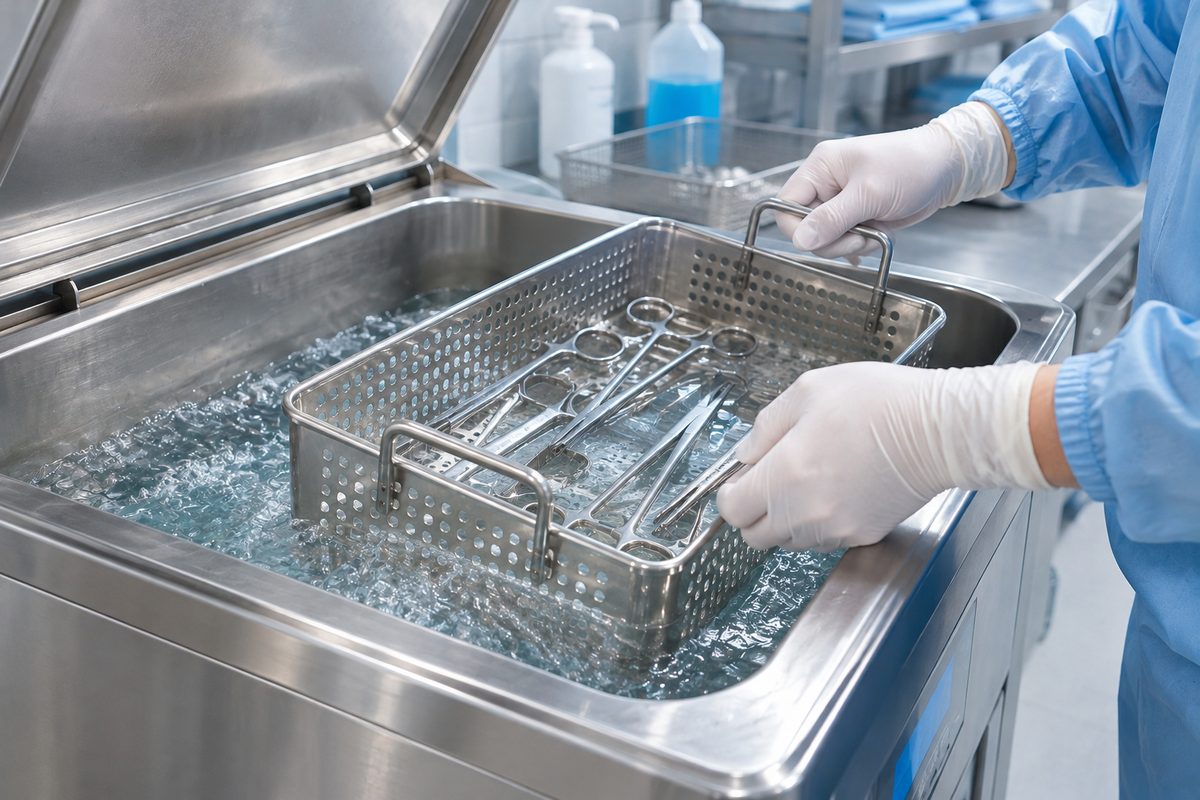
- Cleaning — removing blood, tissue and bioburden, manually or in an ultrasonic cleaner or washer-disinfector.
- Inspection and assembly — checking function and cleanliness.
- Packaging — in sterilization pouches, reels, wraps or rigid containers that let the sterilant in but keep microorganisms out afterwards.
- Sterilization — a validated cycle.
- Storage and distribution — keeping the sterile barrier intact until use.
5How do you know an item is sterile?
Sterility cannot be checked on the item itself, so the process is monitored instead:
- Physical monitoring — printouts or displays of time, temperature and pressure for every cycle.
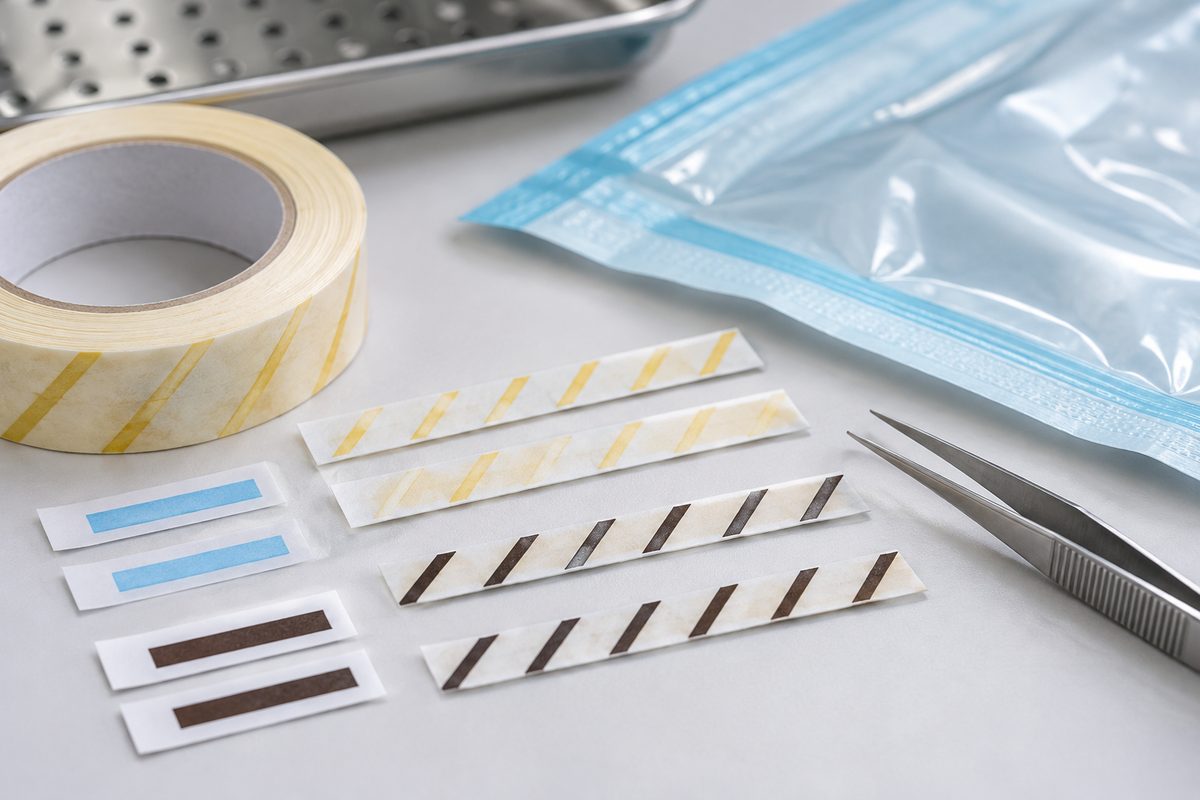
- Chemical indicators — inks that change colour when exposed to the sterilant. Type 1 indicator tape on the outside of each pack shows it has been processed; Type 4 or Type 5 integrating indicators inside each pack confirm the sterilant reached the contents. Read our guide to chemical indicator classes.
- Biological indicators — spores of a resistant organism that must be killed; used at least weekly and with every load containing implants. See biological indicators and spore testing.
- Bowie-Dick test — a daily air-removal test for pre-vacuum steam sterilizers (how to run it).
6Sterilization vs disinfection vs cleaning
Cleaning removes soil; disinfection kills most pathogens but not necessarily spores; sterilization kills all microbial life. Semicritical items (contacting mucous membranes) need at least high-level disinfection; critical items need sterilization. Our article on sterilization vs disinfection explains the difference in detail.
7A brief history
Sterilization of medical instruments began in the 1880s: Charles Chamberland built the first pressure steam sterilizer in 1879, and by the 1890s surgeons were steaming dressings and instruments. Ethylene oxide followed in the 1950s, and low-temperature hydrogen peroxide plasma in the 1990s.
8Choosing consumables that support sterilization
The sterilizer is only half of the system. Packaging must comply with ISO 11607 and EN 868-5, and indicators with ISO 11140-1. When you source pouches, reels and indicators, ask the supplier for ISO 13485 certification, test reports for each indicator type and lot traceability on every carton.
9Frequently asked questions
What is the simplest definition of sterilization?
Sterilization is the process that kills or removes all microorganisms, including bacterial spores, from an object, so that it is free of viable microbial life to a sterility assurance level of 10⁻⁶.
What are the 4 most common types of sterilization in hospitals?
Saturated steam (autoclaving), ethylene oxide gas, vaporized hydrogen peroxide or hydrogen peroxide plasma, and dry heat. Radiation is mainly used by industrial manufacturers of single-use devices.
Is sterilization the same as disinfection?
No. Disinfection destroys most pathogenic microorganisms but not necessarily bacterial spores. Sterilization destroys all microbial life, including spores.
What temperature is needed for sterilization?
For steam, 121 °C for at least 15 minutes (30 minutes for wrapped loads in gravity sterilizers) or 132–134 °C for 3–4 minutes. Dry heat needs 160 °C for 2 hours or 170 °C for 1 hour.
How long does a sterilized item stay sterile?
Sterility is event-related: an item stays sterile until something compromises the packaging — moisture, a tear, a dropped pack or a broken seal — rather than for a fixed number of days.