1Flat vs gusseted reels
| Flat reel | Gusseted reel | |
|---|---|---|
| Shape | Flat tube | Tube with side pleats |
| Roll length | 200 m (100 m on request) | 100 m |
| Widths | 50–500 mm | 50–500 mm + gusset depth |
| Best for | Scissors, forceps, long instruments, probes | Bowls, cassettes, wrapped sets, bulky kits |
| Products | Flat reel | Gusseted reel |
2Width selection guide
| Item | Suggested flat width |
|---|---|
| Burs, small probes | 50–75 mm |
| Single instruments | 100 mm |
| Several instruments / handpieces | 150 mm |
| Small sets | 200–250 mm |
| Larger sets, trays | 300–500 mm or gusseted |
3How to use a reel
- Cut a length that leaves about 3 cm free space at each end plus seal width.
- Seal one end with a heat sealer.
- Insert the item; add an internal indicator.
- Seal the second end; label outside the seal.
- Sterilize and check the printed indicators.
4Reels vs pre-made pouches
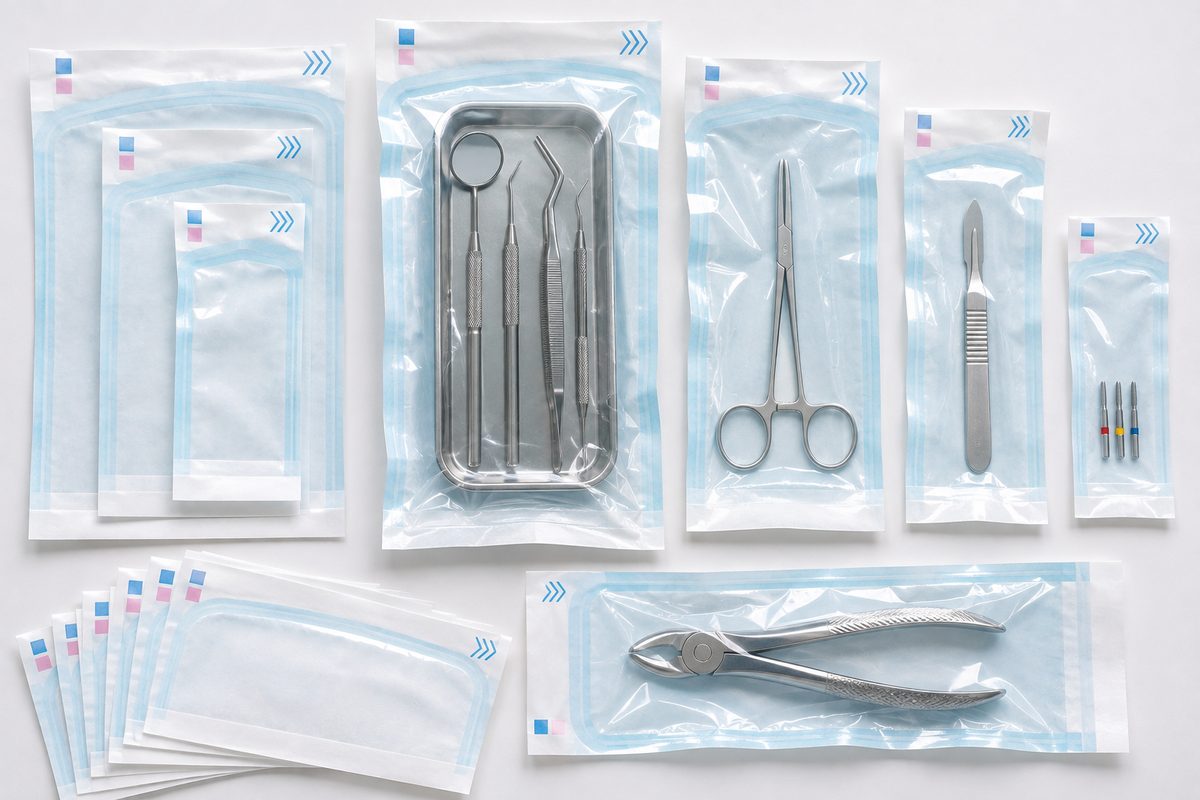
Reels reduce stock-keeping units, adapt to any instrument and lower cost per pack in high-volume CSSDs. Pre-made pouches are faster for repetitive small items and need no cutting. Most hospitals use both. Compare in the pouch buyer guide.
5Note on general "gusseted poly bags" and "lay-flat pouches"
Commercial gusseted poly bags and lay-flat bags on rolls are made for retail and food packaging — they are not sterile barriers. For medical use specify medical paper/film reels compliant with EN 868-5 and ISO 11607.
6Frequently asked questions
What is the difference between flat and gusseted sterilization rolls?
Gusseted rolls have expandable side folds that create depth for bulky items; flat rolls are best for flat or long instruments.
Do sterilization reels need a heat sealer?
Yes. Both ends are closed with a heat sealer at the validated temperature.
How long is a sterilization reel?
Typically 200 m for flat reels and 100 m for gusseted reels, in widths from 50 to 500 mm.