1Standard steam sterilization cycles
| Temperature | Gauge pressure (approx.) | Minimum hold time | Typical use |
|---|---|---|---|
| 121 °C / 250 °F | 1.05 bar / 15 psi | 15 min unwrapped; 30 min wrapped (gravity) | Gravity cycles, liquids, lab media |
| 126 °C / 259 °F | 1.4 bar / 20 psi | 10 min | Some European and lab cycles |
| 132 °C / 270 °F | 1.9 bar / 27 psi | 4 min wrapped (pre-vacuum); 15 min wrapped (gravity) | US hospital pre-vacuum cycles |
| 134 °C / 273 °F | 2.1 bar / 30 psi | 3–3.5 min | European and dental Class B cycles |
| 134 °C / 273 °F (extended) | 2.1 bar / 30 psi | 18 min | Prion-risk instruments (WHO guidance) |
Pressure itself does not kill microorganisms — it is simply the means of reaching saturated steam at temperatures above 100 °C. A temperature reading that does not match the expected pressure indicates air in the chamber or superheated steam.
2Why does higher temperature mean shorter time?
Steam sterilization follows first-order kinetics. The D-value is the time to kill 90 % of a population; the z-value (about 10 °C for *Geobacillus stearothermophilus* spores) is the temperature increase that reduces the D-value tenfold. That is why 134 °C for 3 minutes delivers a lethality comparable to 121 °C for 15–20 minutes.
3Hold time vs cycle time
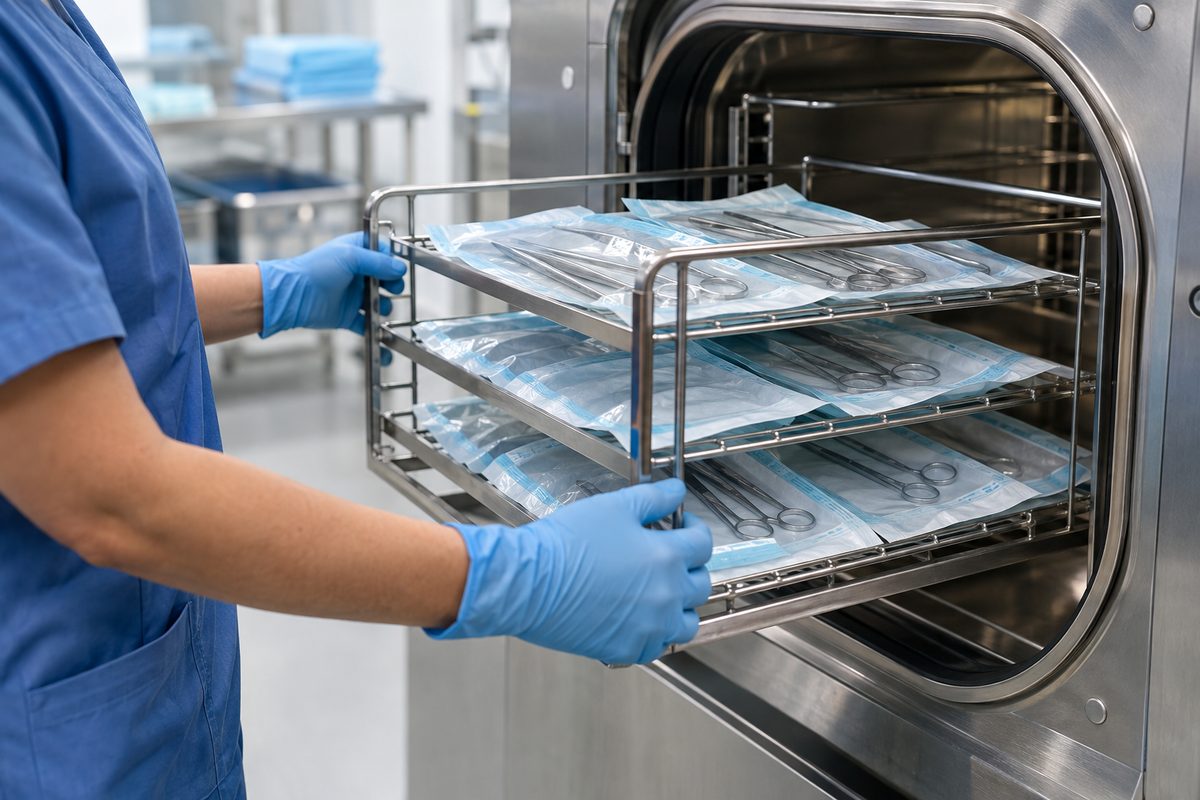
The hold (exposure) time begins only when every point of the load has reached the set temperature. Large textile packs, heavy instrument trays and liquids take longer to heat, so total cycle time — conditioning, exposure, exhaust and drying — is typically 30–75 minutes.
4Dry heat for comparison
Dry heat needs much higher temperatures and longer times: 160 °C for 2 hours, 170 °C for 1 hour or 180 °C for 30 minutes. See dry heat vs moist heat sterilization.
5Verifying that the right temperature was reached
- Physical monitoring — the chamber printout shows time, temperature and pressure for each cycle.
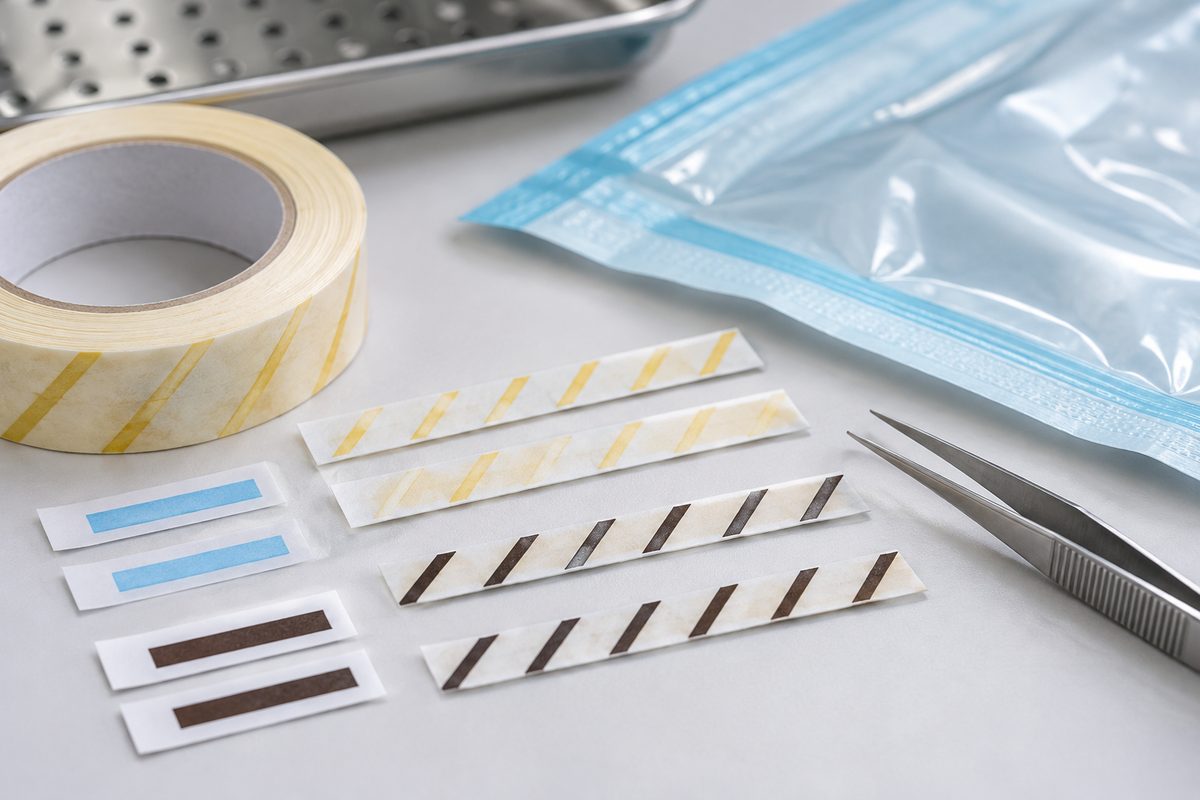
- Type 1 indicators — steam indicator tape proves exposure but not adequacy.
- Type 4 and Type 5 indicators — respond to two or more critical variables; Type 5 integrating indicators correlate with biological kill. See Class 5 integrating indicators.
- Type 6 emulating indicators — designed for one specific cycle, e.g. 134 °C / 3.5 min or 121 °C / 15 min; they fail if any variable falls short. Kangde Med offers custom Class 6 cycle designs from 90 to 140 °C.
6Common causes of temperature failures
Overloaded chambers, blocked drain strainers, wet steam, leaking door gaskets and incorrect cycle selection. A failed indicator means the load must be recalled and reprocessed — never released.
7Frequently asked questions
What temperature does an autoclave sterilize at?
Usually 121 °C (250 °F) or 134 °C (273 °F); many US pre-vacuum sterilizers use 132 °C (270 °F).
What is the pressure inside an autoclave?
About 15 psi (1.05 bar) above atmospheric at 121 °C and about 30 psi (2.1 bar) at 134 °C.
How long should you autoclave at 121 °C?
At least 15 minutes for unwrapped items and 30 minutes for wrapped loads in a gravity sterilizer, plus heating and drying time. Liquids need longer depending on volume.
Is 134 °C better than 121 °C?
134 °C is faster and suits instruments; 121 °C is gentler and is preferred for liquids, some plastics and laboratory media. Both are valid when the cycle is validated for the load.
Which indicator should I use for a 134 °C cycle?
A Type 1 tape outside the pack and a Type 4, Type 5 or a Type 6 emulating indicator designed for 134 °C / 3.5 min inside the pack.