1Types of autoclaves at a glance
| Class B | Class S | Class N | |
|---|---|---|---|
| Air removal | Fractionated vacuum (repeated pulses) | Varies (often single vacuum) | Gravity / thermodynamic |
| Wrapped (pouched) loads | Yes | If validated | No |
| Hollow items / lumens (handpieces) | Yes (Hollow A) | If validated | No |
| Porous loads (textiles) | Yes | If validated | No |
| Drying under vacuum | Yes | Usually | No |
| Typical cycle (134 °C) | 30–60 min incl. drying | 25–45 min | 15–30 min |
2Why most dental clinics need Class B
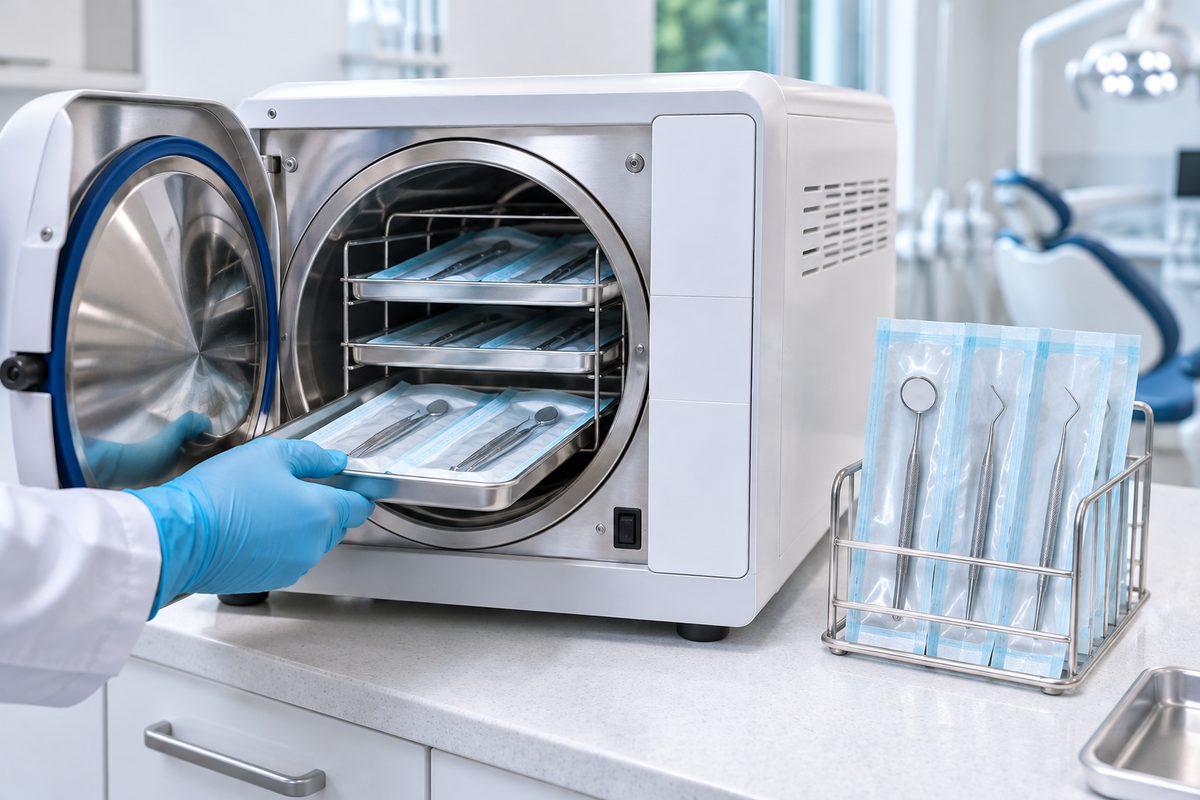
Handpieces, suction tips and many endodontic instruments have narrow lumens where air is trapped; gravity sterilizers cannot remove it, so steam cannot reach the inner surface. Pouched instruments stored for later use also need a vacuum drying phase. That is why European regulators and most dental associations expect Class B sterilizers for general dental work.
3Daily and periodic tests
- Bowie-Dick or Helix test — daily, to verify air removal and steam penetration in hollow loads (Bowie-Dick testing).
- Vacuum leak test — daily or weekly per manufacturer.
- Spore test — at least weekly (spore testing guide).
- Chemical indicators — in every pouch.
4Buying a dental sterilizer: checklist
- EN 13060 Class B certification and validated cycles (121 °C and 134 °C, prion cycle).
- Chamber size: 17–23 L suits most practices; large autoclaves for hospitals and multi-chair clinics.
- Data logging or USB/printer for traceability.
- Water quality requirements (deionized or distilled).
- Local service support.
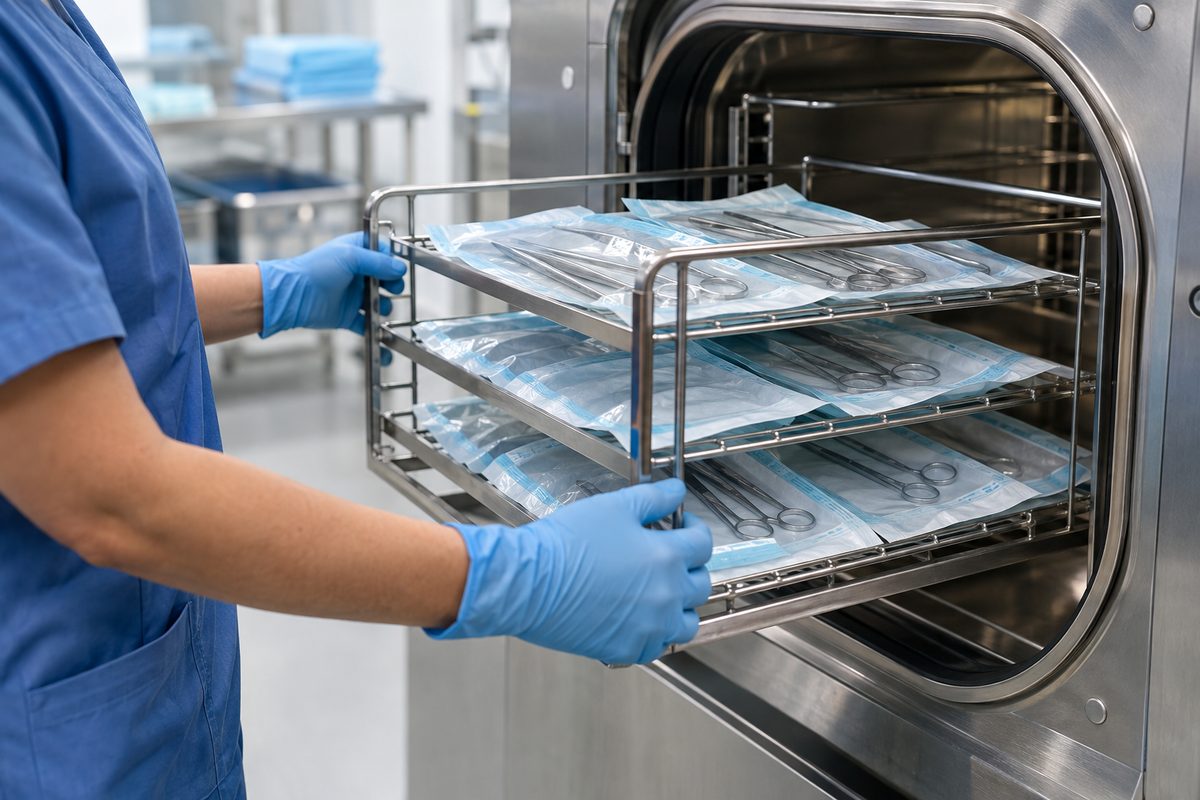
Benchtop/tabletop autoclaves are also used in veterinary clinics, tattoo and beauty salons and laboratories; the same class logic applies.
5Consumables that make a Class B cycle work
Use pouches that meet EN 868-5 and fit the tray without overlapping, load them on edge in a pouch rack, and place a Class 4 steam indicator in each. Kangde Med self-sealing pouches (57 × 100 mm to 135 × 260 mm) are sized for benchtop trays and printed with steam and EO indicators.
6Frequently asked questions
What is a Class B autoclave?
A small steam sterilizer meeting EN 13060 Class B, using fractionated pre-vacuum to sterilize all load types — wrapped, porous, hollow and solid — with vacuum drying.
Can a Class N autoclave sterilize pouched instruments?
No. Class N sterilizers are validated only for unwrapped solid instruments intended for immediate use.
What size dental autoclave do I need?
Most single practices use 17–23 litre chambers. Multi-chair clinics often run two units to keep instruments circulating during maintenance.
How long does a Class B cycle take?
Typically 30–60 minutes at 134 °C including vacuum pulses, sterilization hold and drying.