1Step 1: Point-of-use treatment
Wipe gross soil off during the procedure and keep instruments moist — with a pre-cleaning foam or damp towel — so blood does not dry on hinges and serrations. Remove sharps and single-use items.
2Step 2: Safe transport
Move contaminated instruments in closed, labelled, puncture-resistant containers to the decontamination area of the CSSD.
3Step 3: Cleaning
- Manual cleaning — enzymatic or neutral-pH detergent, soft brushes, lumen brushes; clean under the water surface to avoid aerosols.
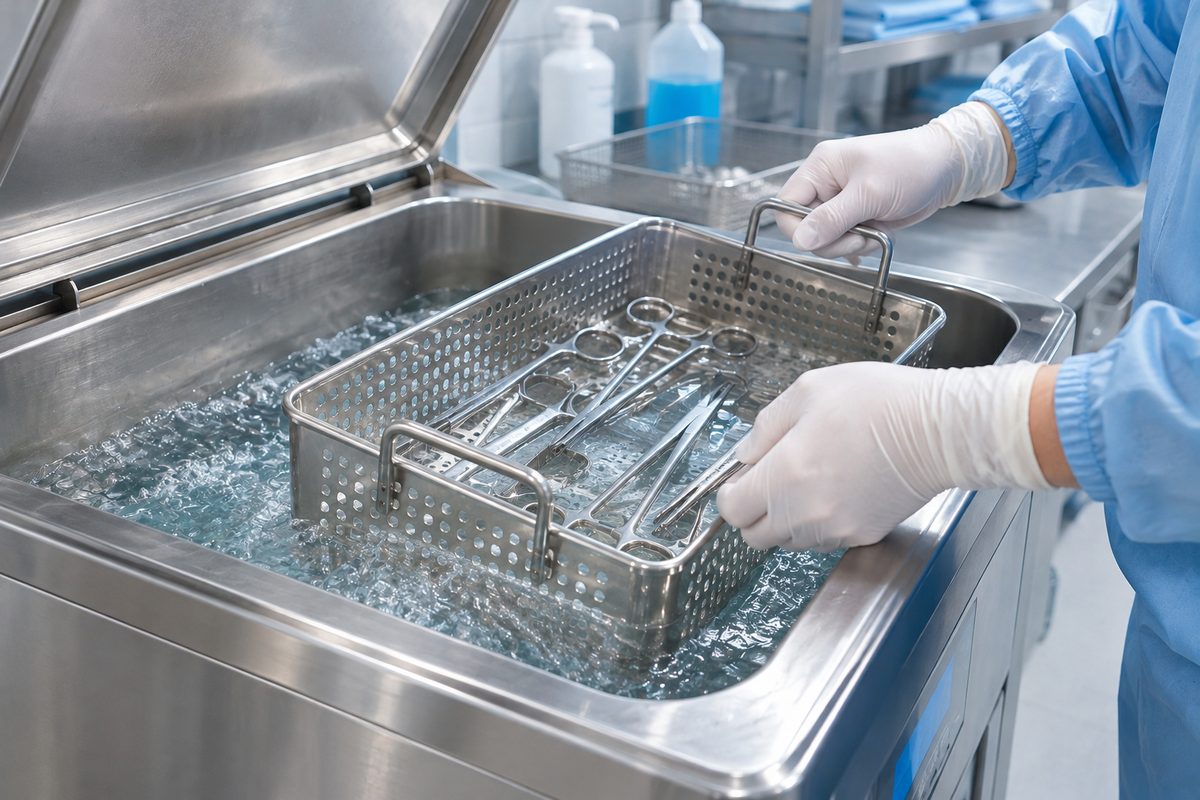
- Ultrasonic cleaning — removes soil from joints and serrations by cavitation (see ultrasonic cleaning).
- Washer-disinfector — automated washing, rinsing, thermal disinfection (A0 ≥ 600) and drying under ISO 15883.
4Step 4: Rinse, dry and inspect
Rinse with treated water, dry thoroughly and inspect under magnification for residual soil, corrosion, cracks and alignment. Lubricate hinged instruments with a steam-penetrable lubricant. Anything still soiled goes back to cleaning.
5Step 5: Packaging
| Format | Best for |
|---|---|
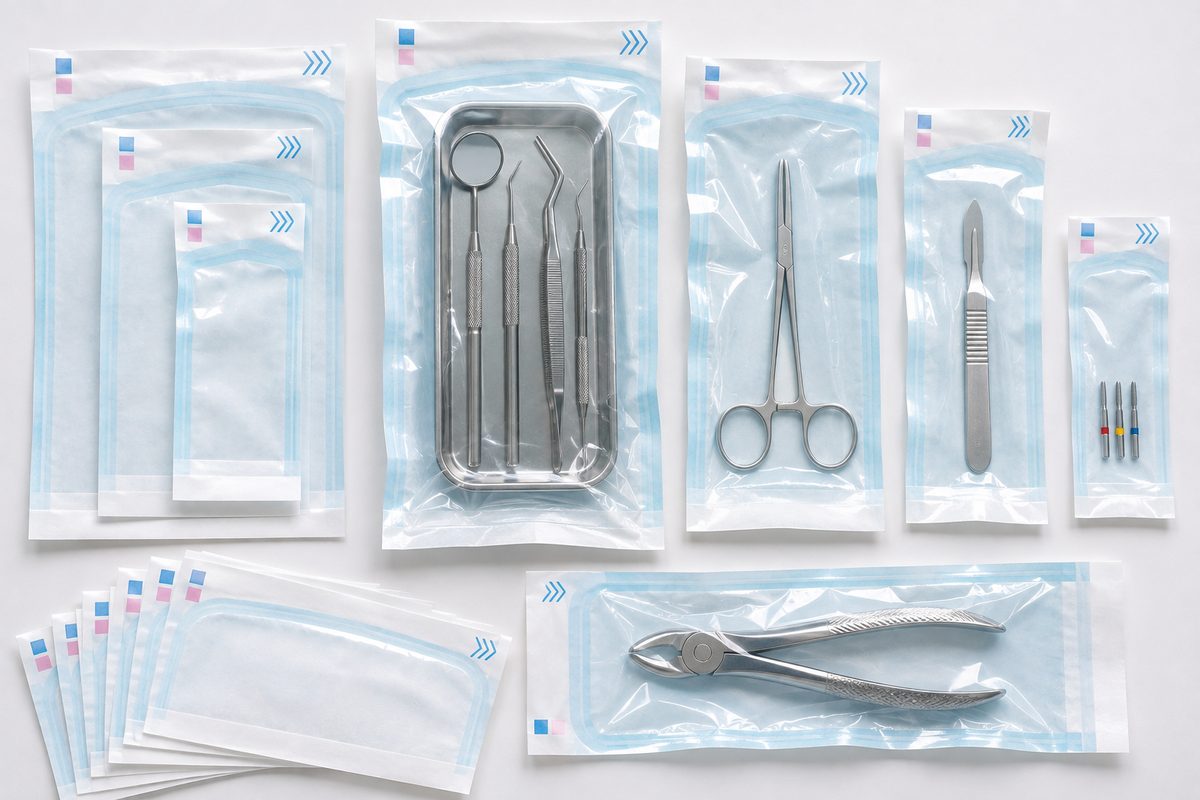
| Sterilization pouches | Single instruments and small sets |
| Flat and gusseted reels | Long or bulky items cut to size |
| Wraps (SMS, crepe paper) | Trays, double-wrapped |
| Rigid containers | Heavy sets, frequent use |
Place a Class 4 or Class 5 integrating indicator inside every set, close wraps with steam indicator tape and label with set name, date, sterilizer and cycle number.
6Step 6: Sterilization
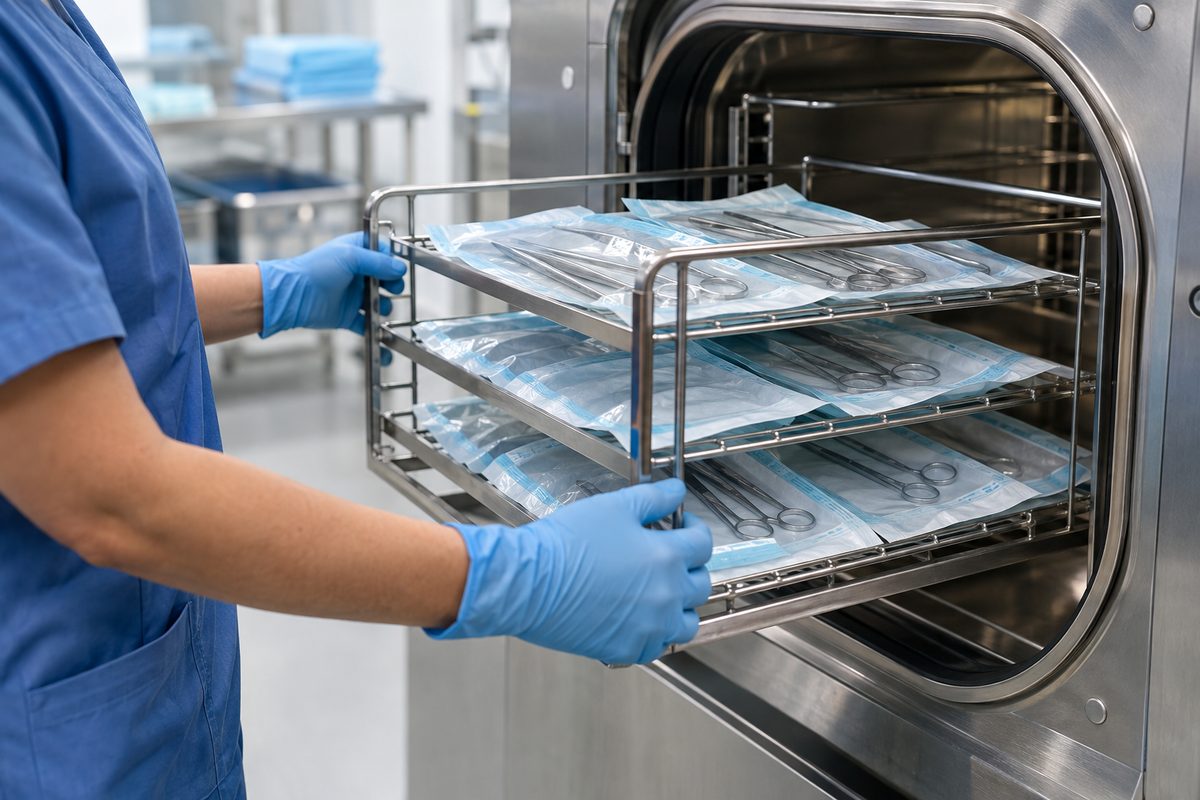
Most stainless-steel instruments are steam-sterilized at 132–134 °C (pre-vacuum). Heat-sensitive instruments go to EO or VH2O2 per the IFU. Do not overload; place pouches on edge. See steam sterilization.
7Step 7: Release, storage and distribution
Check the cycle printout, external and internal indicators and pack dryness. Store packs at 18–23 °C and below 70 % RH (AAMI guidance) on closed or covered shelving off the floor. Sterility is event-related — any tear, moisture or dropped pack means reprocessing. More in how to use sterilization pouches.
8Instrument care tips
Avoid saline and bleach (pitting corrosion), never use steel wool, keep different metals separated, and track repair cycles. Well-maintained instruments last 10+ years.
9Frequently asked questions
What two things need to be completed prior to sterilization?
The instruments must be thoroughly cleaned (and dried) and then inspected and correctly packaged. Sterilization cannot compensate for poor cleaning.
What is the best way to sterilize surgical instruments?
For heat-stable stainless-steel instruments, pre-vacuum steam sterilization at 132–134 °C after cleaning and packaging is the standard method.
How should instruments be cleaned before autoclaving?
Pre-clean at point of use, then clean manually or in an ultrasonic cleaner or washer-disinfector with a suitable detergent, rinse, dry and inspect before packaging.
How long do sterilized instruments stay sterile?
Until an event compromises the package — moisture, tears, broken seals or improper storage. Most facilities use event-related shelf life rather than fixed expiry dates.